War is not new to Indians. Nearly, 2800 years ago, a treatise on wars and weapons was composed here, in our subcontinent. Some of the descriptions of the weapons mentioned in the Mahabharata seem eerily close to the advanced missile systems we use today.
Check the video for the various categories of weapons listed in our war texts and to know about the Brahmastra, the most powerful of the celestial weapons.
AK Ramanujan, the great folklorist from India collected a folktale in which a story and a song once escaped from the mouth of a sleeping woman frustrated that she refused to share them with others. The next morning, when she woke up, she had forgotten both the story and the song that she had kept all to herself.
This folktale illustrates the importance of story-telling for Indians. Stories have a compelling need to be told, listened to and shared. With time, as these stories get told and retold innumerable times in different formats, they evolve into a tradition.
And if there is one story that has been told, retold and continues to be narrated relentlessly some 2,000 years after its composition, it is the Ramayana. No other piece of world literature has fired the collective imagination of a people as much as Ramayana has.
Great epics were composed in Greek (Illiad and Odyssey) and Akkadian (the Sumerian epic of Gilgamesh) too. But today, they remain merely as distant memories from a forgotten past. Whereas, Ramayana remains a living tradition and continues to fascinate and enrich the minds of every passing generation.
Ramayana, the first Indian epic
In the Indian culture, the Valmiki Ramayana, dated to approximately 3rd century BCE, is considered the Adi Kavya or the first poetic composition in Sanskrit of epic proportions. No other composition earlier had had the vastness or richness of the plot that Ramayana had. No other story had reflected the ethics and value system of a society as the story of Rama did.
Everyone loves a good tragedy, as Aristotle’s idea of catharsis would tell us. The most enduring stories told, we often find, are either tragedies or love stories. Ramayana, brimming with karuna rasa, was both – a tragic love-story – and therein lay its eternal appeal. The message that God too was bound by the laws of destiny and suffered very human problems struck a chord with the common man facing societal pressures and challenges.
How the epic spread across the Indian subcontinent….
As Adi Kavya, Ramayana became the first or the basic template of a story for all future stories and epics. Several later mythological compositions and religious texts borrowed the textual template from Ramayana. The influence of Ramayana was so profound that almost all the Hindu religious literature ever composed including the Mahabharata and the Shaiva and Vaishnava Puranas narrate the story of Rama.
But imitation, as they say, is the best form of flattery. Valmiki’s composition set forth an explosion of texts, in Sanskrit, Prakrit as well all as the vernacular resulting in at least 300 different retellings of the epic. With every retelling, Rama’s story diffused into the local culture and gradually emerged as the common denominator that united people of diverse ethnicity and culture across the Indian subcontinent.
Ramayana presented the retellers with a staple story and a set of archetypal characters that were suitably altered to fit the milieu. The language changed, the names changed, the relationships between the cameos changed, but the key characters (Rama, Sita, Lakshmana, Hanuman and Ravana) and episodes from the epic more or less remained the same.
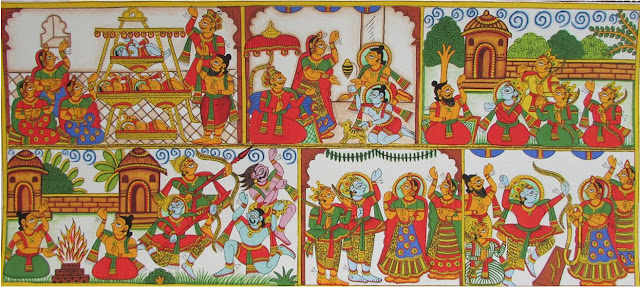
The mode of transmission of the Ramayana was not all textual. Apart from oral renditions, the story of Rama reached the largely illiterate audience in the form of folk and classical dances, songs, theatre, shadow-plays that used puppets, etc. The Ramayana was also presented as the theatrical re-enactment of Rama’s life (Ramlila) and through scroll painting traditions (that support oral story telling with visual props) such as the Phad tradition from Bhilwara, Rajasthan and Kalamkari painting tradition from Kalahasti, Andhra Pradesh.
These art forms borrowed the epic’s basic idea and adapted it to suit the local belief systems, social structure and values. Characters such as Lakshmana and Shurpanaka were assimilated into the native culture and embedded into the local tales, where they freely intermingled with other indigenous characters. For instance, in the Phad story telling tradition, the protagonist Papuji is believed to have been Lakshmana in his previous birth and had married Shurpanakha.
Architecture too developed around the characters and episodes from the epic. The relief at the Prambanan temple complex at Java depicting episodes from the Ramayana and the relief work showing Ravana trying to lift Mount Kailash at Ellora caves are some of the finest examples of story-telling in stone, that were inspired by the epic.
From classical to folk renderings, the story gradually travelled inlands and diffused into the mythology of the tribals too. Gond Ramayani and Bhil Ramayan are two well-known tribal versions of the epic. While Gond Ramayani narrates the story of Lakshmana’s hunt for a bride, in the Bhil Ramayana, Ravana does not battle Rama but returns Sita to him after realizing his blunder.
In a sense, Ramayana, which literally means the path of Rama, is a travel story. Rama travels through a very long route called the Dakshinapath that ran from Ayodhya in the north to Rameshwaram in the south, on his search for Sita.
Even as Rama’s adventures took him down south, Valmiki wove into it previously unknown details of the geography, and flora and fauna of peninsular India, along with an account of the lifestyles of the smaller clans and tribes that inhabited these parts. In as much as these details added to the epic’s novelty value, they also widened the reach of the epic through associations of certain sacred geography with specific episodes from the epic.
….and beyond
With the spread of Buddhism and the colonization of lands such as Sinhala (modern day Sri Lanka) by Indian kings, the story of Rama entered the South East Asian kingdoms. Late professor and Sanskrit scholar Dr. V Raghavan once pointed out that the epic’s popularity in the predominantly ‘Buddhist’ South East Asia can be attributed to its seamless integration into Buddhist writings where Rama was depicted as a Boddhisatva. The Dasharatha Jataka, the Buddhist retelling of the epic, leveraged on the persona of Rama to propagate Dhamma.
Just as Tulsi’s idea of Ramarajya led to the establishment of Rama as the archetypal king for the Indian ruling class, in Thailand, the monarch takes on the title of Rama and rules in his name. In certain Sanskrit inscriptions from Champa (in today’s Southern Vietnam) and Cambodia, we find the local king being compared to Rama.
But this is not to say Rama, was the protagonist in all the versions of the epic. In several versions, the heroic role of vanquishing Ravana was often handed over to Lakshmana, who was perceived to be the more macho of the two. The values that Rama stood for in India (Maryada purushottam and eka patnivrata) were not necessarily endorsed or cherished by every society. In several south Asian versions of the epic, Rama’s commitment and fidelity to Sita is not upheld as a desirable trait and was looked upon as an oddity and often discounted. However, these variations, sometimes small and sometimes significant, enabled the epic to cut across cultural barriers and find root in diverse societies having different value systems.
What makes Ramayana a timeless classic?
Whatever be the composer’s raison d’être for the epic, the popularity and timelessness of this evergreen epic can be pinned down to a single notion – its unequivocal endorsement of the family system. For the society at large, the story of Rama is one of domestic relationships, of familial obligations, fraternal bonds and romantic love. Indian women, for instance, identify with the character of Sita, and the sufferings she underwent, which finds reflection in the Telugu folk song tradition and in the Madhubhani paintings of Bihar. Sita bidai, the departure of Sita for her in-laws’ house, is a common theme in the Madhubani paintings tradition carried on by the women of Mithila, believed to be Sita’s birthplace.
Thus, in the folk art and tribal adaptations of the epic, we often find that the focus is on domestic relationships, and esoteric contemplations on dharma are absent.
Individual ambitions and aspirations have never mattered much in the Indian context. On the contrary, obedience and conformity to a clan’s social structure is encouraged. That is why Ravana’s lust for a woman was punished. Ravana’s was an individual’s aspiration for which he compromised the interests of his clan. Whereas, Rama, even as a manifestation of the divine, did not act for himself, but as a torchbearer for his dynasty and the values it stood for. It is this idea of the superiority of the clan over the individual, endorsed by the epic that continues to resonate deeply with the common man even today.
Ramayana, the greatest story ever told
The question whether Rama existed or not is one we endlessly debate. Maybe Rama did exist, and his incredible life story gained the proportions of a magnum opus with time. Or maybe, he didn’t, and was but an embodiment of an ideal man, a society’s idea of a perfect monarch. Either way, the answer does not matter. Historic figures rarely reach the zenith of adulation that mythological heroes do. As the hero of an eternal epic, Rama, the Kavuyapurush, remains immortal in the collective imagination of all the listeners of the Ramayana. As long as we keep telling stories, Ramayana will continue to be told and heard…
A popular tale about Raksha Bandhan traces its origins to the relationship between Krishna and Draupadi.
The Mahabharata, however, makes no mention of it. On the contrary, the epic introduces Krishna to us when he is attending Draupadi’s Swayamavara/
What exactly was the nature of Krishna’s relationship with Draupadi? If his relationship with her was fraternal, why then was he present at Drauapadi’s Swayamvara?
Nalopakhyana, from the Mahabharata, tells the story of Nala and Damayanti – their love, loss and retrieval.
Don’t be fooled by the name (Nalopakhyana)! In essence, it is the story of a woman hero – a woman who spared no efforts to gain and keep the man she loved!
Listen in to this poignant story of Damayanti and the triumph of her love amidst adversity!
Karna is one of the most nuanced characters created by Vyasa. He crafts the character of Karna so finely making Karna one of the greatest tragic heroes of all times.
Check out how, when and where Karna enters the epic’s story and changes its course forever….
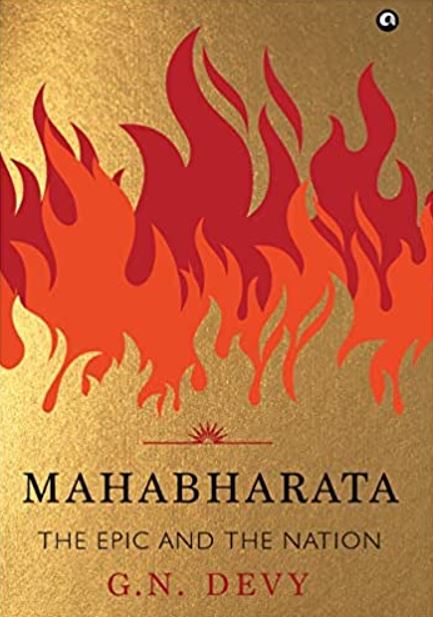
Several hundred books have been written about the Mahabharata. Why one more? Is there place for another sensible read? These are questions that often plague me when people ask me to write a book. Any book. Do I have anything new to say, anything worth saying, anything that has not been said before?
But with the Mahabharata, there is no place for such doubts. The epic is as evergreen as it is eternal. And it reveals newer and newer layers to the seeker. In this book, professor Ganesh N. Devy, an ardent seeker himself, sets out on a quest to answer questions about the epic that have plagued him for long:
What is it about the epic that gives it its timeless appeal – what can explain its incredible effect on the millions of people over thousands of years? How does the epic, even two millennia after its composition, continue to speak to the nation?
Seen from the context of time, these questions are extremely valid, for it explains the epic’s extraordinary survival story.
The epic’s extraordinary survival story
Consider this. In the time period the epic was birthed, evolved and reached its final stage of composition, the Indian sub-continent was ruled by several dynasties (the Mauryas, Guptas, etc.) that were guided by different ideologies. Through this long period, several new religions rose, some flourished, some others died here. Diverse philosophies and doctrines arose. All were discussed, some accepted and embraced while some others were discarded. Through all these historically turbulent times, the Mahabharata continued on its own quest, unperturbed, successfully surviving to this day, quietly crossing two thousand years along its way.
You will realise this is no mean feat, when you compare the Mahabharata with the epics of the near-east and the west such as the Gilgamesh, Iliad and the Odyssey. Today, these epics hold little or no significance today for the people of those geographies. It is from this perspective, professor Devy attempts to decode the eternality of the Mahabharata.
The epic quest
The book is divided into two parts titled – the epic’s quest, and the wheel.
In the first part, the author gives an overview of Mahabharata’s birth, its form and structure and its stages of evolution, from a global-historical perspective. Here, Devy rightly points out that an epic typically emerges at the beginning of a great civilisation and becomes an icon for that civilisation. In the case of the Mahabharata, it was a civilisation that was born at the cusp that marked the end of the pastoral-agrarian state system and the start of feudal state structure in the Indian sub-continent (yuganta).
The Nation’s way of remembering
Professor Devy interprets the Mahabharata as a way of remembering this slice of history. According to Devy, the epic records this history as an uninvolved witness, like the sthithapragnya mentioned in the Gita, with an empathetic detachment, a sage acceptance of all that has been, as it was. (That can certainly explain the epic’s non-judgemental narrative style, the close-to-life conundrums the epic poses and the shade of its characters, that is more grey than black & white.)
However, in reconstructing this past, the epic does not shy away from using myths and fantasy. And it is this technique of combining myth with history, according to professor Devy, that is one of the prime reasons for the epic’s timeless appeal.
An epic for all and everyone
In the second part of the book, the author discusses what he thinks is the epic’s relevance in the modern times and the significance it holds for us today.
Although the epic deliberates continuously on the aspect of dharma, Devy believes that the epic’s dharma is different from the dhamma (dharma) of Buddha or the dharma prescribed by the Dharmasutras that were laid down by Brahmins for Brahmins. Mahabharata, according to Devy, has steered clear of these influences. And that is an important reason why its appeal transcends religious, sectarian and linguistic communities making it an epic for all and everyone.
Mahabharata & the Chakra
The dharma of the epic, according to Devy, is the dharma of the chakra (wheel), that symbolises the relentless passage of time and eternal movement. In fact, the kala chakra or the wheel of time is, for Devy, the central metaphor of the epic.
Indeed, this idea of circular time is reflected in the narrative style of the epic too, with the epic beginning in the future, at the snake sacrifice of Janamajeya, where the past story is narrated before ending again at the snake sacrifice, which becomes the present for the reader. The past, the present and the future thus merge into one big circle of time carrying the potential for multiple beginnings and multiple endings.
Epic’s fluid narrative
According to Devy, it is this idea of multiple beginnings of the epic – which could either be the Satyavati-Shantanu story or the oath of Bhishma or the birth of Pandu and Dhritarashtra or the conflict between the Pandavas and the Kauravas – that is the epic’s central message for a diverse society such as ours with different origin stories. A diverse society that is unfortunately being forced to agree to a single narrative for the beginnings of Bharata.
As a linguist, Devy enriches his views by presenting some interesting possibilities about the interpolations in the epic and how the nature of tense in Sanskrit grammar could have been one of the reasons for the popularity of the epic. For me, these were the really interesting takeaways from the book. The book could have, however, done with better editing and proof reading.
Hindu religion, as we know it today, is mostly an aggregation of what used to be six independent sects called the Shanmatha, which included the worship of the Sun (Saura), Vishnu (Vaishnava), Shiva (Shaiva), Kumara or Skanda-Karthikeya (Kaumara), Devi (Shakta) and of course, Ganapati (Ganapatya).
The Missing Deity of the epic
The third and the fourth parvans of the Mahabharata namely the Vana parvan and the Virata parvan refer to the worship of many of these deities. But there is one deity, whose worship references are conspicuously absent in the epic. Which deity is that?
Let’s first start with the deities that the epic knew.
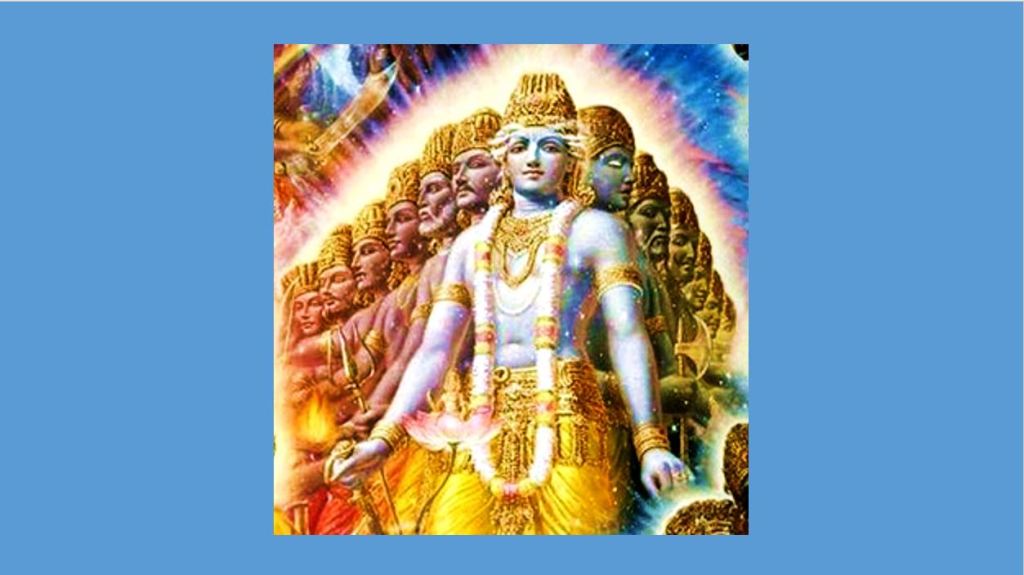
Vishnu: As everyone knows, Krishna, considered an avatar of Vishnu, plays an overarching role in the epic. The Bhagawad Gita clearly presents Krishna, the incarnation of Vishnu, as the supreme god.
That is not to say the other equally large Shaivite tradition does not find representation in the text.
Shiva: References to Shiva can be found in the Vana parvan where Arjuna performs a penance to please Shiva and obtains divine weapons such as the Pashupathastra from him. Of course, who else, but the destroyer God, to grant Arjuna weapons of mass destruction!
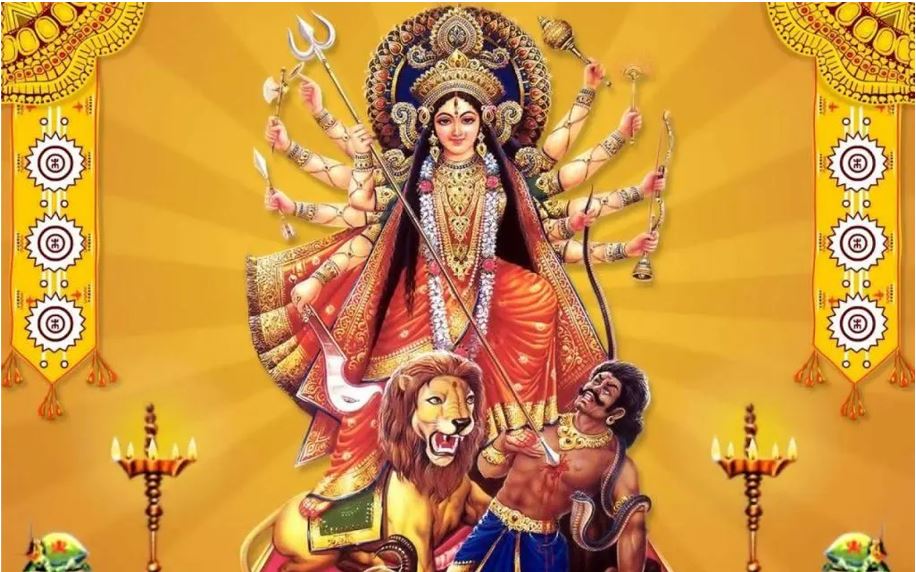
Shakti: While Shakti, as Parvati, does make a cameo appearance in the Pashupatastra episode of the Vana parvan, she finds greater representation in the Virata parvan. Just before the Pandavas enter the kingdom of Virata to complete the last year of their exile incognito, they pray to Durga, the goddess of war. The Pandavas, led by Yudhishtra, sings praises of goddess Durga seeking success in their mission. She appears before them and blesses them with successful completion of the incognito year without being recognised by the Kauravas and eventual victory over them in the war.
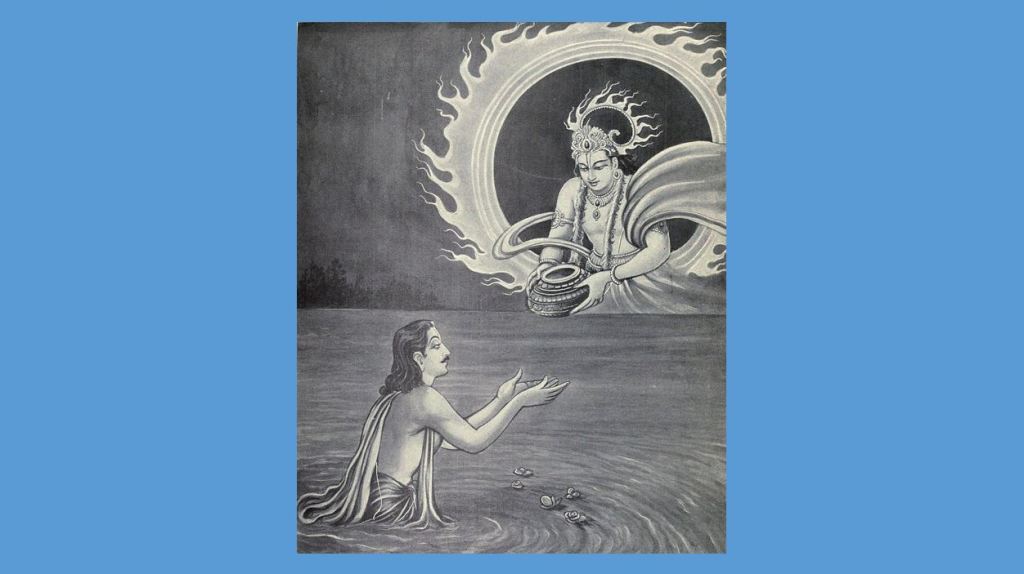
Surya: While in exile in the forest, Yudhishtra is faced with the responsibility of not just feeding his brothers and their wife, Draupadi, but with also ensuring that all the Rishis and Brahmins who have followed him into the forest are fed. So, he performs several austerities to the Sun god, Surya, who blesses him with the Akshaya patra, the vessel that ensured unending supply of food for the Pandavas and their retinue through their stint in the forest. Yudhishtra knew very well, which God to please, when it came to asking for bountiful food!
Karthikeya: The story of the birth of Skanda, the son of Shiva, his childhood exploits and his slaying of Tarakasura are narrated by sage Markandeya in detail in the Vana parvan. Stories about the exploits of Karthikeya, the war God, may have inspired the Pandavas to prepare themselves for the impending war.
Thus, we find that the epic, through its period of evolution, accommodated several existing and emerging religious sects in the form of stories about their chief deities. All deities of the Shanmatha, except one!
So, which deity is absent from the epic’s narrative?
It is Ganesha!
Why are there no stories about his worship in the epic?
Mystery solved
One reason may be that for a long time, Ganapati worship was concentrated in the Western parts of India where he was considered a farmer’s god. Ganapati worship became more mainstream and widespread only around the 5-6th century CE by when it started to emerge as a large and independent sect. Interestingly, by this time, the Mahabharata, as a text, had more or less completed its period of evolution and had reached its final written form. That can explain why stories of Ganesha did not find themselves into the epic.
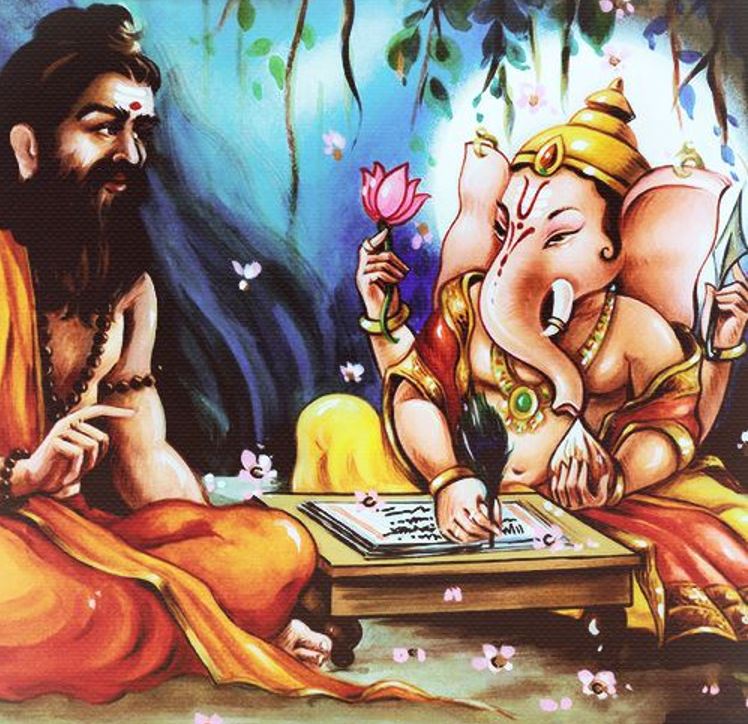
However, as the worship of Ganesha became popular over time, his devotees could not be disappointed. So, the story about how Vyasa requested Ganesha to be his scribe while composing his magnum opus, was inserted as a frame story in a later-period manuscript, written in Devanagari and belonging to India’s North-Central region.
Who knows? The clever interpolator who inserted the story, may have been a Ganpati devotee himself. But as an elephant-headed God of wisdom, he could not have found a better scribe to pen down Vyasa’s magnum opus!
Om Ganeshaya Namaha!
For more on the Vyasa and Ganesha story, watch this 2-minute video!



 Kulture Katha