
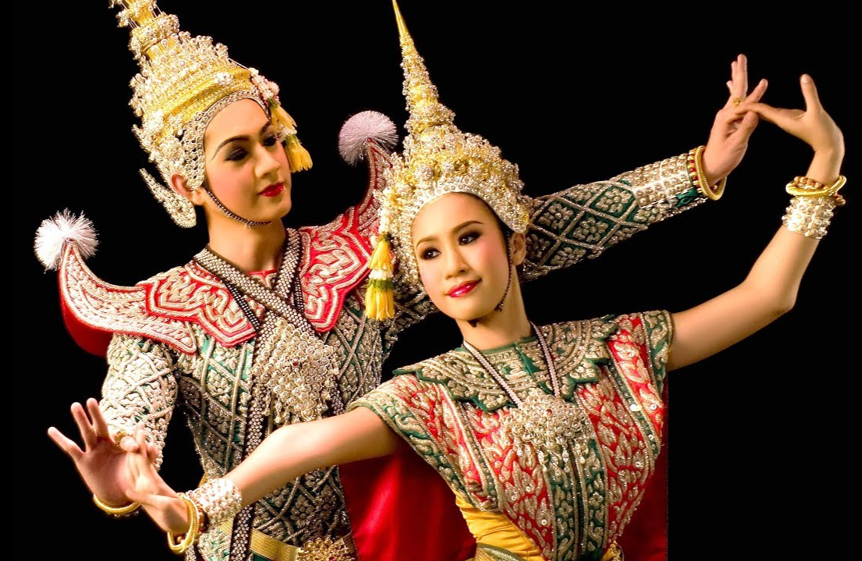
How the epic spread beyond the Indian subcontinent
After diffusing widely and deeply into the Indian subcontinent, the story of Rama slowly and surely started to seep overseas.
With the spread of Buddhism and the colonization of several lands in the Indian ocean by Indian kings, the story of Rama entered the South East Asian kingdoms.
Late professor and Sanskrit scholar Dr. V Raghavan once pointed out that the epic’s popularity in the predominantly ‘Buddhist’ South East Asia can be attributed to its seamless integration into Buddhist writings where Rama was depicted as a Boddhisatva. The Dasharatha Jataka, the Buddhist retelling of the epic, leveraged on the persona of Rama to propagate Dhamma.
Just as Tulsi’s idea of Ramarajya led to the establishment of Rama as the archetypal king for the Indian ruling class, in Thailand, the monarch takes on the title of Rama and rules in his name. In certain Sanskrit inscriptions from Champa (in today’s Southern Vietnam) and Cambodia, we find the local king being compared to Rama.
But Rama was not always the protagonist in these stories…
But this is not to say Rama, was the protagonist in all the versions of the epic. In several versions, the heroic role of vanquishing Ravana was often handed over to Lakshmana, who was perceived to be the more macho of the two. The values that Rama stood for in India (Maryada purushottam and eka patnivrata) were not necessarily endorsed or cherished by every society. In several south Asian versions of the epic, Rama’s commitment and fidelity to Sita is not upheld as a desirable trait and was looked upon as an oddity and often discounted. However, these variations, sometimes small and sometimes significant, enabled the epic to cut across cultural barriers and find root in diverse societies having different value systems.
What makes Ramayana a timeless classic?
Whatever be the composer’s raison d’être for the epic, the popularity and timelessness of this evergreen epic can be pinned down to a single notion – its unequivocal endorsement of the family system. For the society at large, the story of Rama is one of domestic relationships, of familial obligations, fraternal bonds and romantic love.
Indian women, for instance, identify with the character of Sita, and the sufferings she underwent, which finds reflection in the Telugu folk song tradition and in the Madhubhani paintings of Bihar. Sita bidai, the departure of Sita for her in-laws’ house, is a common theme in the Madhubani paintings tradition carried on by the women of Mithila, believed to be Sita’s birthplace.
Thus, in the folk art and tribal adaptations of the epic, we often find that the focus is on domestic relationships, and esoteric contemplation on dharma are absent.
Individual ambitions and aspirations have never mattered much in the Indian context. On the contrary, obedience and conformity to a clan’s social structure is encouraged. That is why Ravana’s lust for a woman was punished. Ravana’s was an individual’s aspiration for which he compromised the interests of his clan. Whereas, Rama, even as a manifestation of the divine, did not act for himself, but as a torchbearer for his dynasty and the values it stood for. It is this idea of the superiority of the clan over the individual, endorsed by the epic that continues to resonate deeply with the common man even today.
Ramayana – story or history?
The question whether Rama existed or not is one we endlessly debate. Maybe Rama did exist, and his incredible life story gained the proportions of a magnum opus with time. Or maybe, he didn’t, and was but an embodiment of an ideal man, a society’s idea of a perfect monarch. Either way, the answer does not matter. Historic figures rarely reach the zenith of adulation that mythological heroes do. As the hero of an eternal epic, Rama, the Kavuyapurush, remains immortal in the collective imagination of all the listeners of the Ramayana.
And as long as we keep telling stories, Ramayana will continue to be told and heard…
Click the link below to know about Ramakien, the Thai version of the Ramayan:
 Kulture Katha