Death & What happens after… in Indian thought

Science may have conquered various myths relating to our lives in the course of human evolution, but there is still one aspect of our existence that science is yet to decipher and give us convincing answers for….and that is death….and what happens after!

World over, cultures have tried to explain the horrifying reality called death using mythology. Some, like the ancient Egyptian civilization, left such a strong trail of their belief in afterlife in the form of lofty pyramids and grand tombs that have survived 3000 odd years to tell us the dead man’s tale.  

Afterlife and life thereafter….

View Post

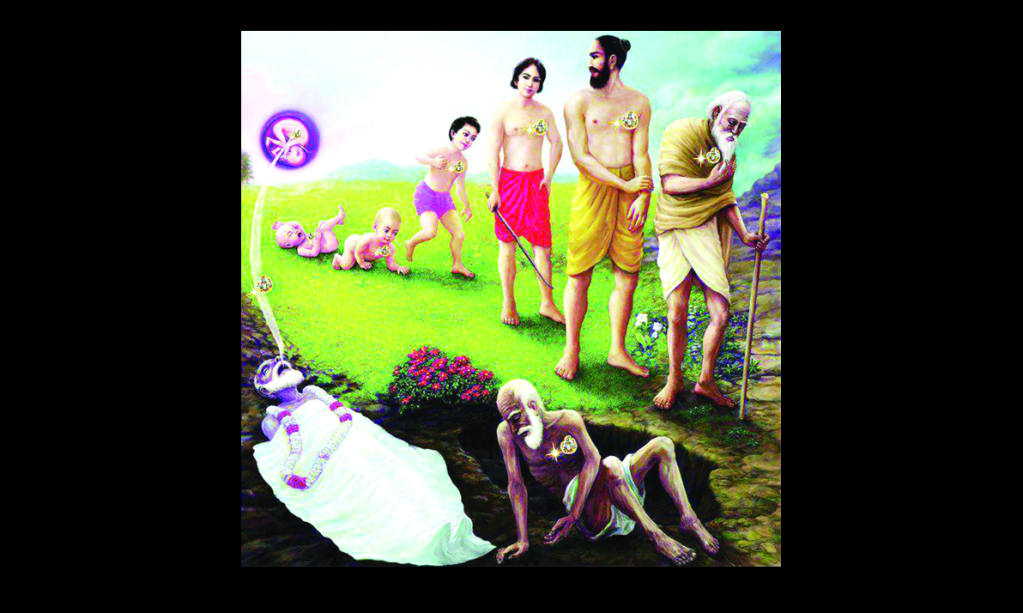
Just as the ancient Egyptians, Indians too believe in afterlife. In Indian thought, the deceased enters the heavens (Swarga) or hell (Naraka) depending upon the accumulated reward of his good deeds (punya) and bad deeds (paapa) but does not become a permanent resident there. He/She spends a short while there till his/her accumulated rewards/penalties are exhausted. Thereafter, the deceased takes on another body and life (not necessarily human) to be born again on earth. The cycle of births and deaths continue till one day, having exhausted all its karma (fruits of its actions), the life attains moksha (or birthlessness).

How the beliefs and rituals evolved through the Vedic and Puranic times….

While the Vedic texts do express the ancient man’s fears and beliefs around death, their key intent seems to have been to ensure the safe transport of the dead persons to the land of their forefathers (pitrulok or yamalok as yama was considered the first man to die). Towards this end, they lay down meticulous specifications for conducting elaborate funeral ceremonies.

Although the Rig Veda does express the desire for the dead to return to earth taking on a new body, it does not deliberate much on the concepts of paapa/punya and accumulated (sanchita) karma. These ideas seem to have evolved later, and are dealt with in detail in the Puranas. The Puranic texts that were composed later, thus discuss at length the various expiatory rites. These rites, if performed during the lifetime of an individual, promise to alleviate the toils faced by the aggrieved soul on its journey to pitruloka and also ensure his/her next birth in a better stratum of the society.

Some of these rituals seem to have their basis in the idea of the gift economy (dana), created to sustain the livelihood of the priestly class. The texts prescribed several danas in the form of cows, umbrellas, pots and vessels (in gold and silver) to be made to the Brahmins, who had no means of income of their own, but lived on the charity and magnanimity extended by the other three varnas (the Kshatriyas, Vaishyas and Shudras). Thus, we find the idea of the benefits arising from making dana to the Brahmins gaining strength through the Puranic times.
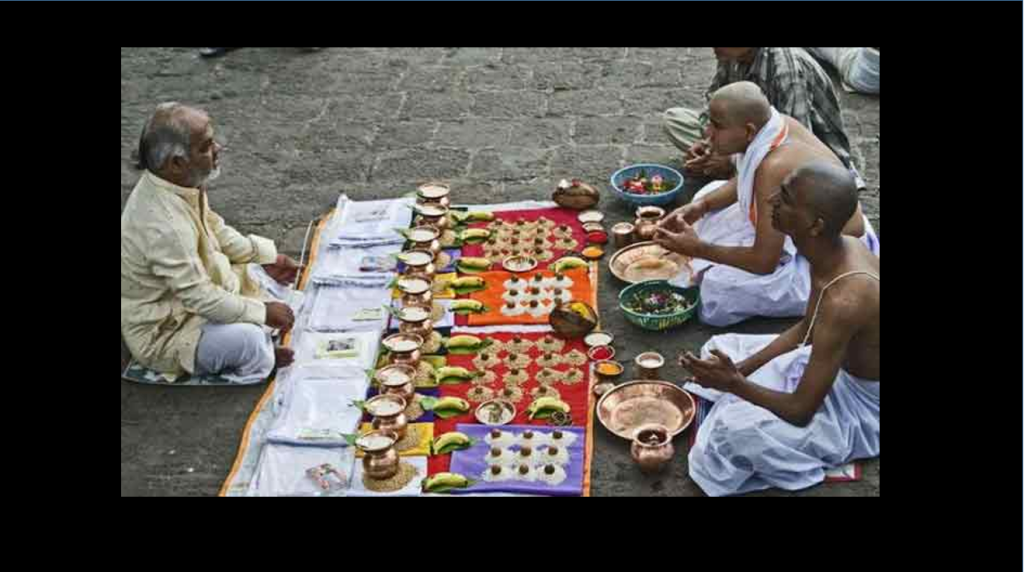
While the Vedic people offered the things that they believed the dead person would need on his upward journey as oblations into the fire, from the Puranic age, these items have come to be donated to the Brahmins who collect them on behalf of the dead persons.

The period of the Puranic age that coincides with the Gupta era saw a further evolution of the ideas around afterlife with increased emphasis on certain beliefs that the priestly class shared with tribals.    

Vijay Nath in her book, Puranas and their Acculturation says that the need to bring more and more peripheral lands under farming during the Gupta era led to the grant of these lands to Brahmins. The movement of the priestly class to the countryside put them in close contact with the tribes that occupied the lands identified for agricultural development. This resulted in the exchange of several ideas between the two communities, including the elaboration of the tribal ideas of hell and retribution in the Puranas.

The Puranas talk about some 100 different types of hells (Naraka) specific to the sins committed by the deceased. These texts present a picture of these purgatories in great graphic detail using elaborate imagery and supporting mythology, and seem to have been used as deterrents against deviation from tradition and norms in the fast expanding society.

The journey of the lone soul….. 

According to the Garuda Purana, the deceased’s soul is believed to set forth on a long and arduous journey to yamaloka pulled away from the memories of his surviving kith and kin by yama’s assistants. The Purana gives a detailed account of the soul’s journey and the travails it faces along the way, before it reaches yamaloka where its paapa/punya accounts are maintained.
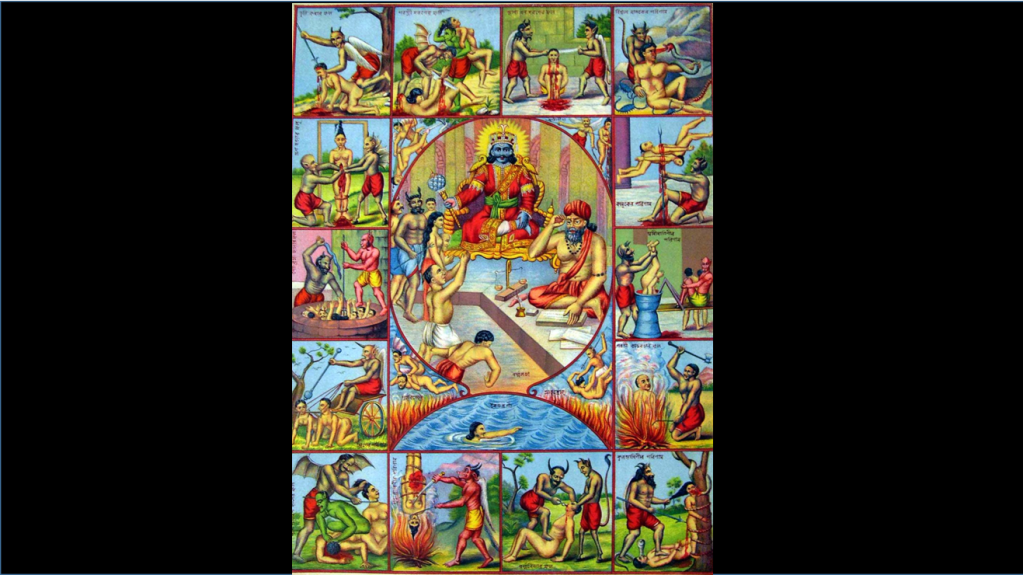
This journey of the soul is supposed to take a whole year during which time it experiences hunger and thirst just like the living. To satisfy the needs of the soul, the heir of the deceased (or any other karta) is expected to offer it a rice ball (pinda) every month during the course of its year-long journey. Feeding on these rice balls, the soul gradually regrows a part of the body every month, and by the end of the year when it reaches yamalok, it has regrown its complete body. At the yamaloka, judgement is awarded and the soul begins the process of its re-entry into the mortal world, all over again.

Today, to many of us, these rituals and the mythology behind them may seem macabre and belonging to a dark, primitive past. But the truth is that today, even as we talk about the colonization of outer space, we don’t have better answers for the two primal questions that have nagged mankind over eons – where do we come from and where do we go?  Here, mythology scores by giving you an answer that is as good as any….
Fantastic Birds & where to find them….in Indian Mythology

Mythical birds such as Hippogriffs, Thestrals, Grindilows and Basilisks do not just roam the world of Harry Potter, they are very much part of Indian mythology too…..

Watch the video for a glimpse of some legendary birds from Indian mythology with fantastic abilities to separate milk from water or birds that feed on moonbeams or the ones that grieve for their mates….

The Gandaberunda

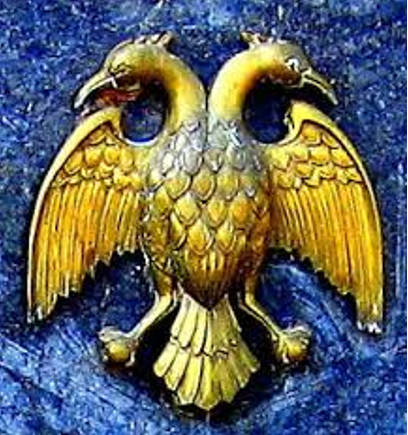
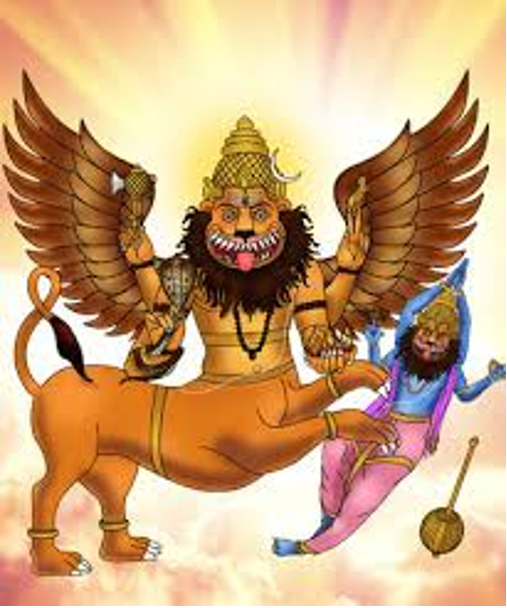
The Gandaberunda is a two-headed bird that features in the Vaishnava mythology. In the story of the Narasimha avatara, even after killing Hiranyakashayap in his man-lion form, Vishnu’s anger remains unabated and he remains in a destructive mode as ugra murthy.
So Shiva decides to tame his anger and takes the form of Saraba, another liminal or hybrid being with the combined attributes of the lion and a bird.

Sharabheswara

Seeing Sarabha angers Vishnu more and Sharaba and Narasimha takes the form of Gandaberunda, the two-headed bird, and after a fierce fight, eventually defeats him.

It’s interesting how the Narasimha avatara story features so many exotic beasts with hybrid attibutes, and definitely needs a closer look!

Two-headed beings are quite common in World mythology. They signify additional strength, might and even he ability to see in multiple directions.

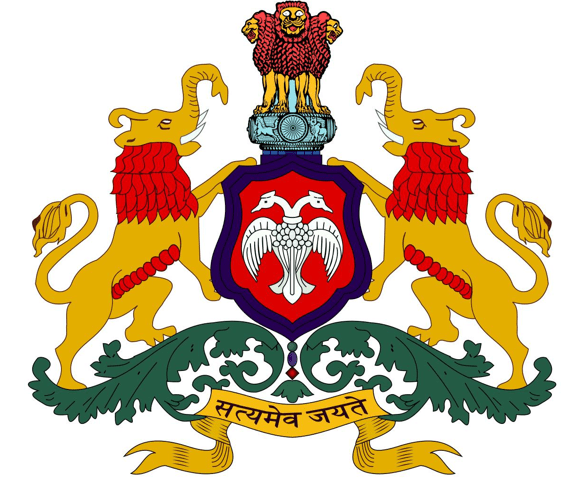
The Gandaberunda is largely associated with power and might and was the royal insignia of the erstwhile Mysuru kingdom. Subsequently, after Indian became a republic, it was adopted by the Karanataka State government as its official emblem and today adorns the state’s flag.

Metaphoric use of birds in Indian mythology

One more reason why birds are a common motif in Hindu mythology is that they are perceived as dvija or twice-born. The idea of being twice-born is unique to Hindu culture where persons born in the three varnas (i.e. the brahmana, the vaishya and the kshatriya) undergo an initiation ceremony called upanayanam (the thread ceremony) after which they are inculcated into a period of education that prepares them for life as a householder.

Thus dvijas are believed to be born twice – once from their mother’s womb and the second time after their upanayanam.

And a bird too is born twice – once as an egg laid by its mother and the second time as a bird that hatches from the egg.  In fact, the dictionary meaning for the Sanskrit word ‘dvija’ is a bird.

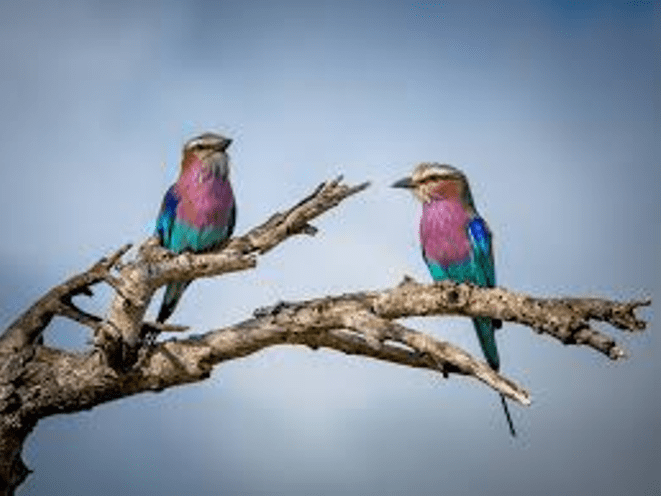
Birds have also been used to refer to the atman or the self. In Vedic and Upanishadic lore, the story of two birds is narrated where one bird is referred to the jiva and the other to the atman. Jiva refers to the self with the individual consciousness and the atman to the undifferentiated consciousness.

The story points out how as the ‘jiva’ bird immerses itself in worldly pleasures, the ‘atman’ bird quietly watches everything without participating in any of the actions.

Soon jiva tires of worldly pleasures and strife and realises that unending bliss lies only in realising its true identity as the atman.

Click to watch the symbolism of Garuda in Indian mythology!

When a Guru becomes greater than the God…

गुरु गोबिंद दोऊ खड़े, का के लागूं पाय।
बलिहारी गुरु आपणे, गोबिंद दियो मिलाय॥

In one of his popular couplets (dohe) Kabir wonders, “Both my guru and my god stand before me and I wonder who I should salute first” and answers his question with, “I salute my guru first as he was the one who showed me my god.”’

In the Indian tradition, we find that a guru is held higher up even above the almighty, as he is the one who leads his/her students towards the path of enlightenment. (In Sanskrit, the syllable ‘gu’ means darkness and the syllable ‘ru’ means to drive away).

God, Guru & Shishya and their magical relationship

There is an endearing story that illustrates the magical relation that exists between god, a guru and his disciple.

In the temple town of Thirumazhisai near the ancient Pallava city of Kanchi, lived an Alwar saint. The Alwar was an ardent devotee of Vishnu, who was the presiding deity at the local temple. Vishnu’s idol in the temple is in a reclining posture and the lord is seen lying on the coils of Shesh nag immersed in his Yoga nidra.

The Alwar had a disciple named Kanikannan, who was his most favourite. Kanikannan was as illustrious as his guru, and one day, he happened to see an old hunchback lady deeply engrossed in cleaning the temple. Impressed with the lady’s single-minded devotion, Kanikannan touched her back and lo! by magic, her bent back straightened out and she turned into a beautiful young lady that she had once been. Although deeply grateful for her physical transformation, she, however, decided to continue her life in the services of her lord, Vishnu, at the temple.

Hearing about the miracle performed by Kanikannan, the ageing king of Kanchi approached the disciple and requested that his youth too be restored so that he could indulge in worldly pleasures once again. Not surprisingly, Kanikannan refused to help saying that youth had no use for somebody who only wanted to indulge in the base pleasures of life. Angered by his response, the king ordered that Kanikannan be banished from his kingdom. Kanikannan was more than happy to comply with the order.

But what’s a guru without his pupil?

So, when the Alwar got to know about his shishya’s fate, he decided to follow suit and leave the kingdom as he didn’t want to be away from his favourite disciple. But, he also had deep love for the lord of the temple, whom he had tirelessly served for long. Not wanting to leave his lord behind, he commanded Vishnu to gather his serpentine mat (Shesha nag) that he was lying on and leave the city along with him.

And, what’s god without his devotee?

So, Vishnu implicitly obeyed the Alwar’s orders. Gathering Adisheshan’s coils, he set out along with the Alwar to leave Kanchi. Soon, the three of them – god, guru and shishya – left the city and reached its outskirts where they decided to halt for the night.

Meanwhile, the city of Kanchi descended into darkness and misfortune, as Lord Vishnu, when he vacated the temple, had taken his consort, Shree (Goddess Lakshmi who lived in his bosom), along with him. As a result, all the city’s riches and wealth took flight and the kingdom soon became derelict of prosperity.

Terrified by the turn of events, the Pallava king at once rushed to Lord Vishnu, who was camping on the city’s outskirts, to seek forgiveness and begged him to return to Kanchi. But the good lord replied that he had no choice in the matter and it was really up to his devotee, the Alwar to take a decision. Disappointed by the lord’s response, the king then approached the Alwar and requested him to return to the city along with the lord. But the Alwar threw up his hands saying that he had no say in the matter and if his disciple Kanikannan was willing to return to the city, he too would gladly do so. So, the king was left with no choice but to approach Kanikannan and seek forgiveness for his own thoughtless act.

Approached by the king himself, Kanikannan relented, and decided to forgive him and return to Kanchi. The guru, of course, did not want to be left behind without his disciple. So he too decided to return. Having decided thus, he commanded his dear god to once again fold up his serpentine bed and return to Kanchi along with him.  

The trio thus returned to the city of Kanchi, and so did Shree (prosperity) along with them!

If the Alwar was an exceptional guru truly devoted to his disciple, Cheethalai Chattanar, a Tamil poet, took his commitment to his pupils to a different level.

The guru who punished himself for his pupils’ mistakes

Cheethalai Chattanar was the poet who is believed to have composed ‘Manimekalai’, counted among the five great Tamil epics and also considered the sequel to Silappathikaaram, the epic story of Kannagi.

Folk lore has it that for every mistake his pupils made, Chattanar would punish himself by striking his head with the stylus that was used for writing on palm leaves. So his head was seen perennially bruised with pus and blood covering it. It is said that he derived his name from the punishment that he gave himself, ‘Chee’ meaning pus and ‘thalai’ meaning head in Tamil.

With time, Chattanar’s students, for fear of punishing their guru, began to learn their lessons diligently and perfectly!

Both Alwar and Chattanar were indeed extremely dedicated gurus who had an uncommon relationship with their disciples.

Here’s the story of two unlikely gurus – a devoted wife and a butcher who instructed a brahmin.

Two uncommon gurus

Our scriptures have always held that a guru is someone who opens one’s eyes to the truth, irrespective of who he or she is. So, it was not mandatory that a guru had to be a man or a Brahmin or anyone from the higher caste.

Here is the story of how a Brahmin sage acquired wisdom from a devoted wife and a virtuous, as told in the Vana Parva of the Mahabharata.

According to the story, one day, deep inside a forest, a Brahmin monk sat in deep meditation. Unfortunately for him, his deep deliberations were disturbed by a crane perched on the tree above him  that defiled his head with its droppings. In a fit of anger, he burnt the bird with his mere look, using his yogic powers.

Shortly after this, he came to a household begging for alms to feed himself.  But the lady of the household was busy attending to her sick husband and asked him to wait till she was free to give him alms. Heckled by being made to wait, the monk threatened the lady of the house to use his yogic powers against her. But the unperturbed lady shot back saying she was not a crane who could be burnt down by him and that he must learn to keep his composure. Hearing her response, the monk was shocked.

How had the lady come to know of the happenings inside the forest? The lady replied saying that she did no austerities like the monk, but had acquired the power to read his mind by simply doing her duty to her husband. Her unflinching and unwavering commitment to her duty vested her with miraculous powers.  

Her response humbled the monk who realized he had a lot more to learn in the world. The lady then directed him to an enlightened butcher, Dharma Vyadha, in Mithila who could instruct the monk on the aspect of dharma.

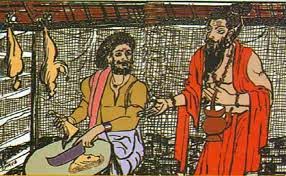
Surprised and initially unconvinced over what a lowly butcher could teach him, the monk nevertheless approached the butcher and asked him how he could have achieved enlightenment by doing such ‘filthy, ugly work’. To which, the butcher responded saying, “no duty was ugly or impure, but the manner in which the work was done decided its worth.”

The detailed discourse between the butcher and the monk is referred to as the Vyadha Gita and has valuable insights on swadharma (one’s duty), detached performance (nishkamya karma) and on virtuous conduct.  

For more stories from the epics, click the link below:

Why is Saturn the most feared graha?

The navagrahas or nine ‘planets’ are an integral part of Indian astrology. Each of these grahas is associated with a specific guna or trait. And their unique attributes are conveyed in the form of little myths and stories in the manuals on astronomy and astrology.

Planets like Jupiter, Moon and Venus are considered naturally benefic. They shower benefits on a person depending upon their placement in his or her horoscope.

Grahas like the Sun, Mars, Rahu, Ketu and Saturn, on the other hand, are considered malefics, which means by nature they are prone to causing harm, and invariably they are believed do so but in varying degrees depending again upon the placement of these planets in a person’s birth chart or horoscope.

Surya (The Sun)

The Sun or Surya is a powerful, hot, fiery graha, malefic by nature, and is associated with the father or father-figure in a person’s horoscope.  Of course, consistent with our other scriptures, in Jyotisha too, the Sun is known as the bestower of intellectual brilliance. The sun is the source of all creation and is identified with the soul. In our mythology, the Sun is also the father of yama, shani and the rivers Yamuna and Tapati.

Chandra (The Moon)

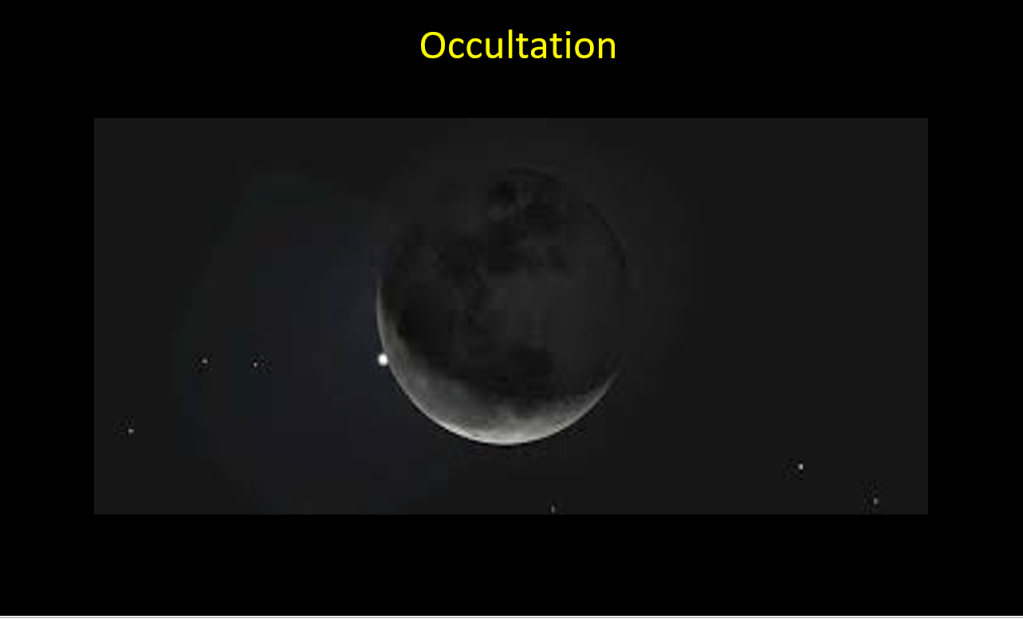
As we’ve already seen (What does our Panchanga tell us?) the Moon makes a journey through the 27 Nakshatras in the sky. In our mythology, these 27 nakshatras are considered to be his wives and the moon is believed to spend time with each of them. But according to a story, he didn’t divide his time equally among all his wives. Instead, he spent most of his time with the brightest nakshatra named Rohini, which made his other wives jealous. The story goes on further, but what is interesting here is probably what the myth is trying to tell us about a celestial phenomenon called Occultation.

Occultation is a phenomenon where the moon in the course of its revolution around the earth sometime reaches a particular position in its orbit from where it obstructs the view of a star for an observer on the earth. Modern astronomers point out that the myth about the moon spending too much time in Rohini was born probably because Rohini may have had the most number of occultations.

Budha (Mercury)

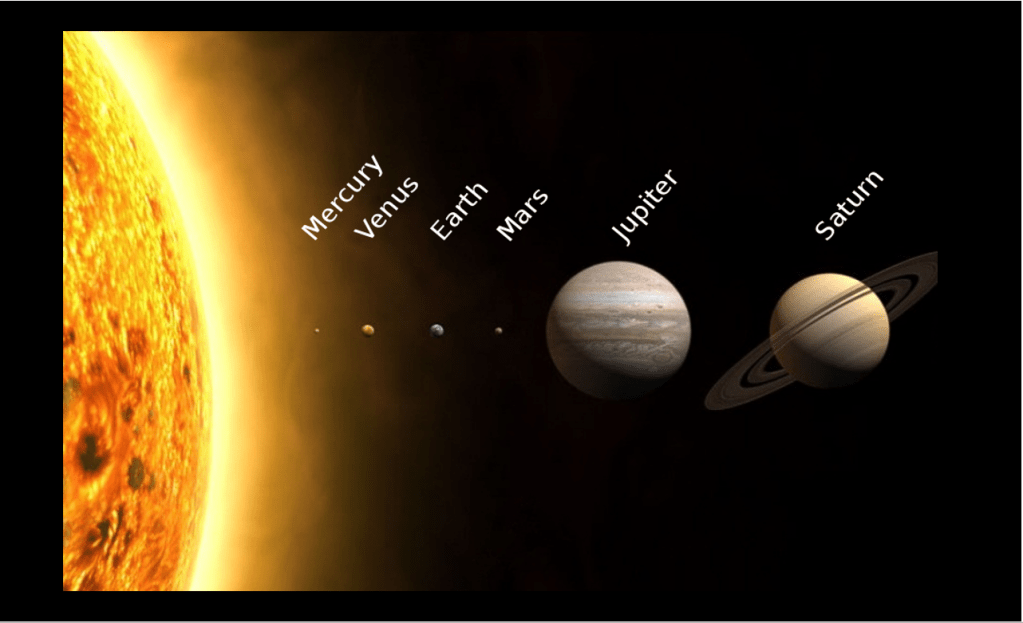
Mercury or Budha is the planet closest to the Sun in the solar system. According to Jyotisha, Budha is neither malefic nor benefic but a neutral graha. He becomes either malefic or benefic depending upon his position vis-à-vis other planets. Budha rules over speech and is associated with mental dexterity and intelligence. In Indian mythology, he is considered the son of the Moon and Tara, the wife of Jupiter or Guru.

Shukra (Venus)

Venus or Shukra is the brightest planet in our solar system. Shukra is a benefic planet and is the lord of all material luxuries and enjoyments in life. In Indian mythology, Shukra, as the guru of the asuras, is believed to possess Sanjivani Vidya or the knowledge to bring back the dead. This myth may again have arisen from the observation of a celestial phenomenon.

As we all know, Venus’s orbit is very close to the Sun. So, it disappears from an observer’s view on earth for long periods of time, but eventually appears at the other end of the horizon when it has moved away from the Sun.

This repeated disappearance and reappearance of the planet in the sky may have reminded man of the ideas of death and rebirth, which may have found a mythical parallel in the story about the planet’s (Shukracharya’s) ability to bring back the dead.

Angaraka/Mangal (Mars)

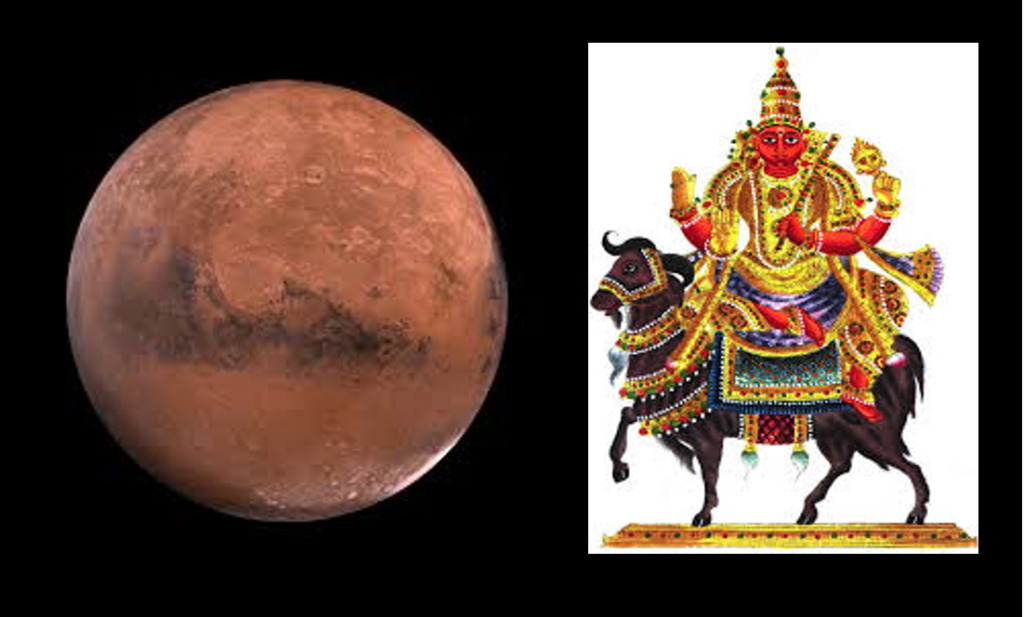
Mars is the planet closest to earth and is often referred to as the Red planet. The iron oxide deposits on its surface gives Mars its red colour. Because he glows like the red-hot coals, he is referred to as Angaraka. And possibly because of the red colour, Mars is identified as a warrior god across cultures.

In Indian mythology, Angaraka is identified closely with Karthikeya, the warrior deity, known for his vigour and virility. According to another story Angaraka’s origin is traced to the story of Daskha’s sacrifice, to which Shiva was not invited.

In anger over Daksha’s insult of her husband, Sati immolated herself. Which infuriated Shiva and he set out to destroy the world. That’s was when the terrible demon Virabhadra was born out of Shiva’s sweat. Virabhadra destroyed the sacrifice of Daksha and the same Virabhadra was later blessed by Shiva to become a planet in the sky known as Angaraka.

This myth is an expression of the cruel, malefic nature of Angaraka or Mangal as he is popularly known. Which also explains why Mars is frequently associated with war and fire accidents. 

Guru (Jupiter)

Jupiter is the largest planet in our solar system and in Indian astrology, this graha is referred to as Guru. By virtue of being the biggest planet and the most benefic of all the grahas, he is considered the Guru or the teacher. In our mythology, he is the guru of the devas. Being a powerful graha, Guru’s beneficial placement in a person’s horoscope is believed to allow a person even to get away with crime.

Shani (Saturn)

And now for the most interesting planet of all, a planet that everyone is terrified of – Saturn or Shani. Of the five planets counted among the nava grahas, Saturn is the farthest planet in our solar system and is hence the slowest to go around the sun. Hence, he is referred to as ‘shanaishcharaha’ or the slow mover. In Jyotisha, he is considered a malefic whose gaze on a person can completely destroy a person’s fortunes.

Because of its distance from the Sun, Saturn also symbolises isolation.  A story from the Indian mythology can best illustrate this idea. And that is the story of Nala in the Nala-Damayanti story from the Mahabharata. The misfortunes that Nala, the king of the Nishadas faced, when he lost his kingdom in a game of dice, his separation from his wife and children, his loss of personality when he turned into a hunchback, all these are attributed to Saturn’s transit through his horoscope. During the period of 7 and a half years, commonly known as sade sati, Nala faced isolation from his kingdom and his family.

But what makes Shani such a scary graha?

That is because Shani is the force of fate, the force that makes one experience his or her karma. He ensures that no one escapes the fruits of his or her action. Shani is associated often with his brother, Yama and lords over time, misfortunes and bereavements. Because of his association with death, and also possibly because of his distance from the Sun, he is associated with the colour black.

Rahu and Ketu

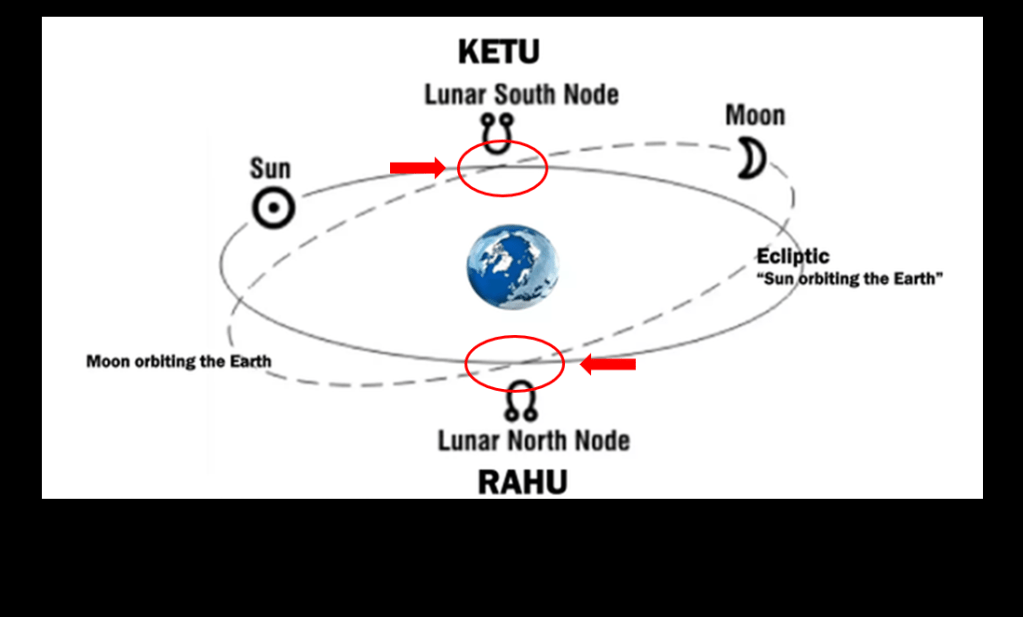
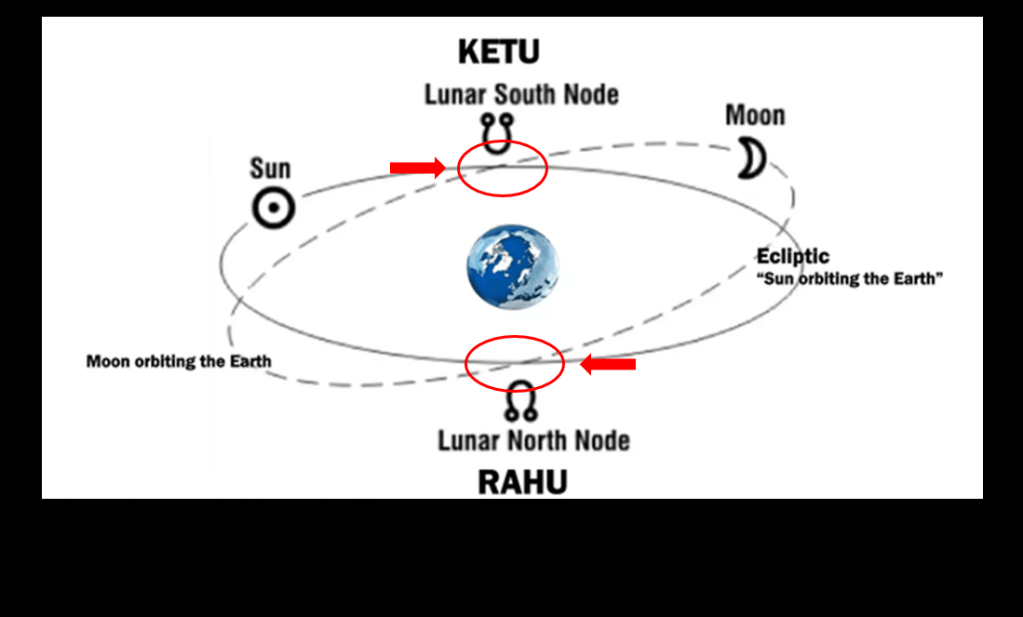
Now for Rahu and Ketu, who are merely shadow planets. As we already know (What does our Horoscope tell us?), Rahu and Ketu are not really planets, but merely represent the nodal points where the orbits of the Sun and the moon intersect.  These are the points at which eclipses form.

What is interesting here is that the Rig Veda mentions Svarbhanu, a demon that causes eclipses. The story of Svarabhanu later evolved into a myth where a snake was believed to swallow the moon during the lunar eclipse. Over time, svarbhanu came to be identified with rahu and ketu, which are today counted among the nine grahas. The very word graha means to catch or seize. By this definition Rahu and Ketu were indeed grahas, as they seized the sun and the moon thus creating eclipses.

Because of their demonic qualities and their ability to create illusions in the form of eclipses, these grahas were considered malefic in nature.

What does our horoscope tell us? (The Indian Astrology series)

When we talk astrology, the one word that pops into our mind immediately is horoscope! What is a horoscope or a jataka or a kundali, as we call it in India?

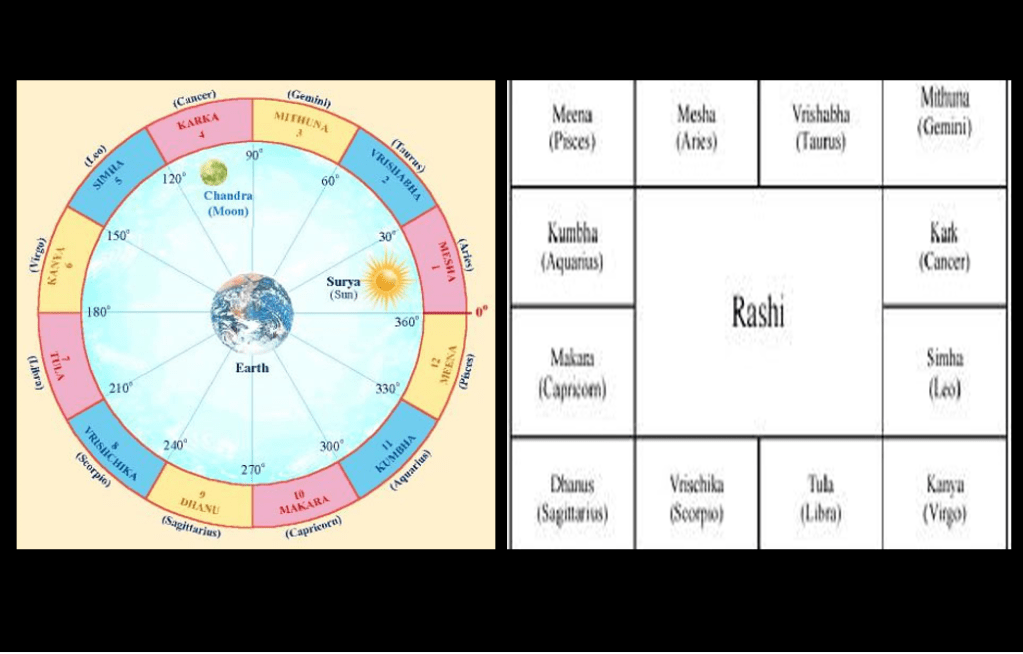
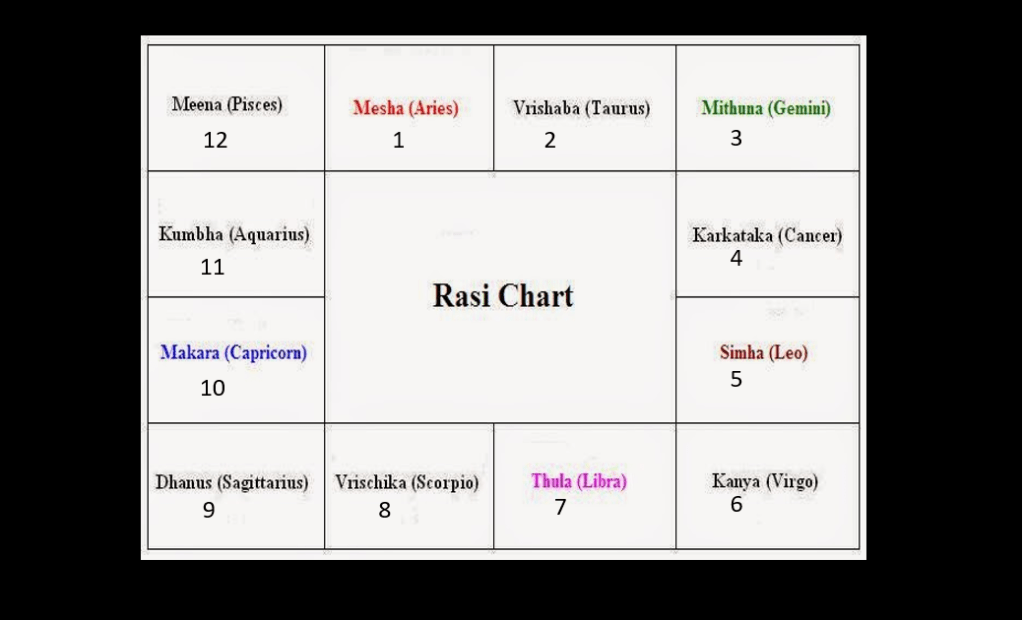
A horoscope is actually a map of the skies at the time of a person’s birth. The chart should ideally have been circular, but it has been reduced to the shape of a square for easy readability, just like we have done with our maps.

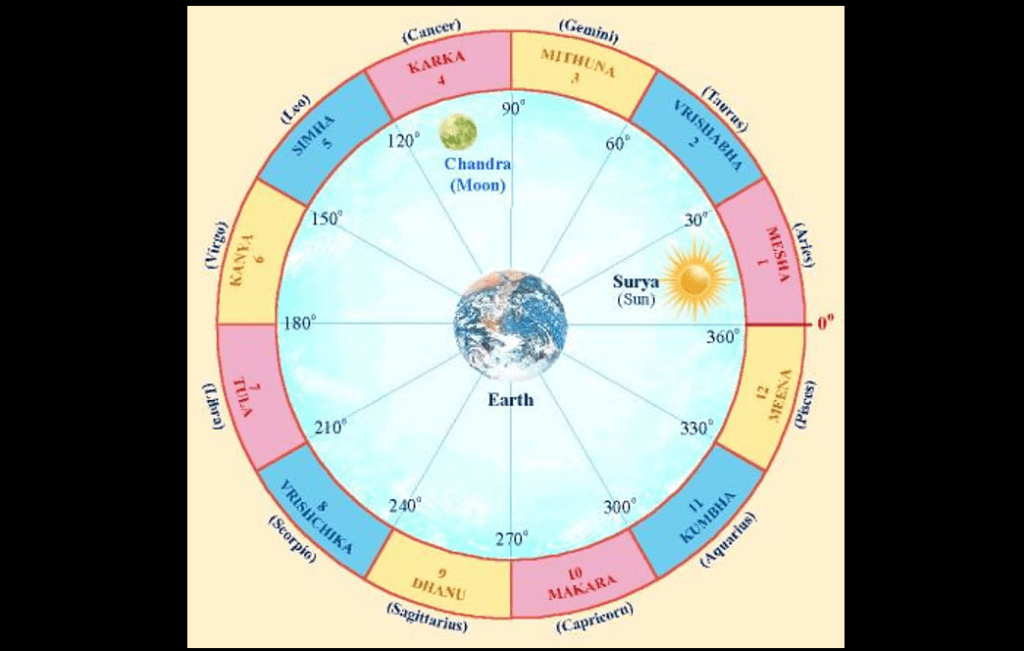
Now, this map or horoscope contains 12 boxes that represent each of the 12 rashis starting from mesham or aries to meenam or pisces. Rashis, as you may recollect from my previous video, are constellations in the sky through which the Sun is seen to move, as seen from the earth.

Each of the rashis measures exactly 30 degrees. So all the 12 rashis together add up to 360 degrees, which is the measure of the elliptical orbits of all celestial bodies including the sun and the moon.

However, in the Indian luni-solar system, the moon is given more prominence and a person’s rashi is the rashi in which the moon is found at the time of birth. So, this is different from the Western system of astrology where the Sun’s placement in a constellation decides a person’s zodiac sign. So the westerners follow the sun while we in India follow the moon.

But why do the Rashis start with Aries?

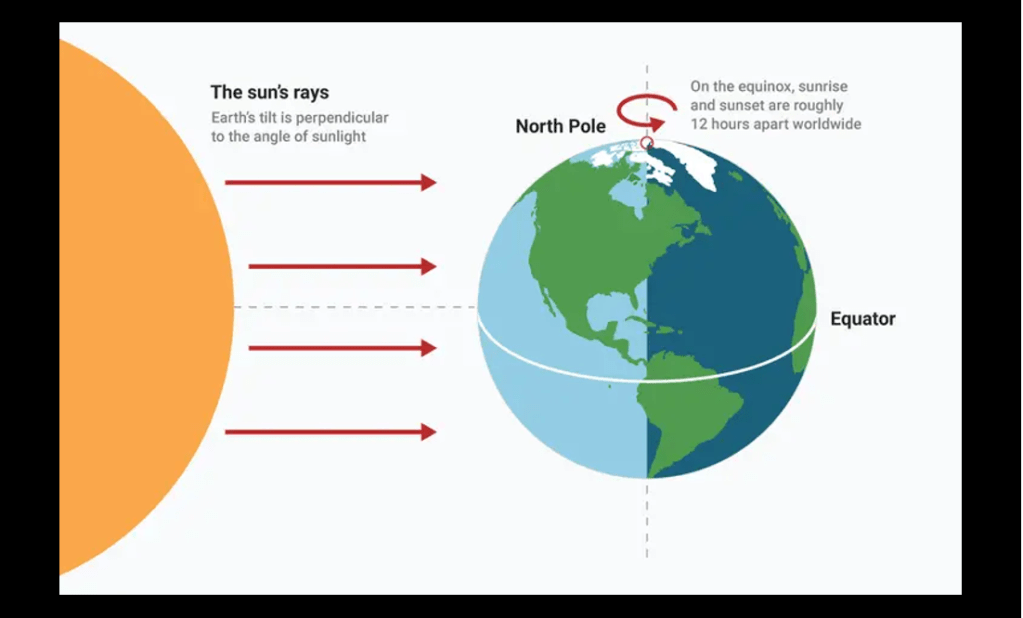
Really long ago, the Indian lunar calendar system got integrated with the Hellenistic or Greek solar calendar systems.  As a result, ancient Indian astrologers adopted the western system of placing Aries or Mesham at the start of the zodiac. That’s the reason why our rashi chart starts with Aries, which marks the beginning of Spring equinox, one of the two times in a year when the duration of the day and night in a day are equal.

Now, coming back to our horoscope, the exact place, date and time of birth is used to arrive at the position of the nine grahas or planets with respect to the rashis. Talking of grahas, it is interesting to note that of the nine grahas, which we tend to associate with planets, only five are actually planets, which are Mercury, Venus, Mars, Jupiter and Saturn.

The remaining grahas are the Sun and the Moon and Rahu and Ketu. You may realise that none of these are planets. Sun is a star, moon is the earth’s satellite and Rahu and Ketu are not real grahas but only represent the points of the intersection of the orbits of the sun and the moon.

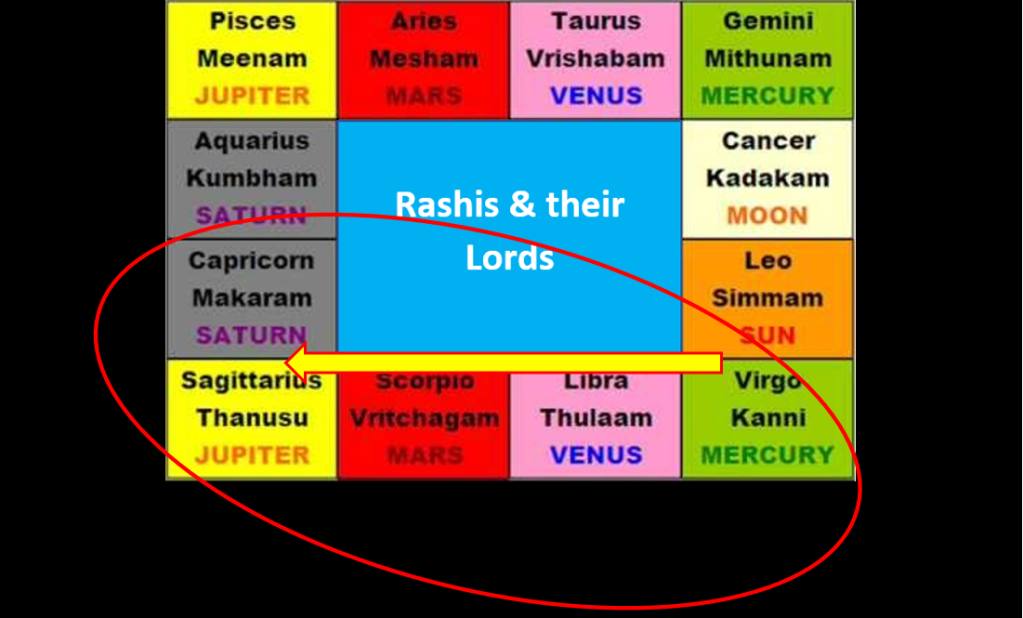
Now, these grahas are given lordship over the 12 rashis. While the Sun is the lord of Leo or Simha rashi, the moon lords over Cancer or Kataka rashi. The other five grahas, mercury, venus, mars, Jupiter and Saturn rule over two rashis each. For example, Venus rules over Taurus and Libra and Saturn rules over both Aquarius and Capricorn.

North Indian format vs South India format of horoscope

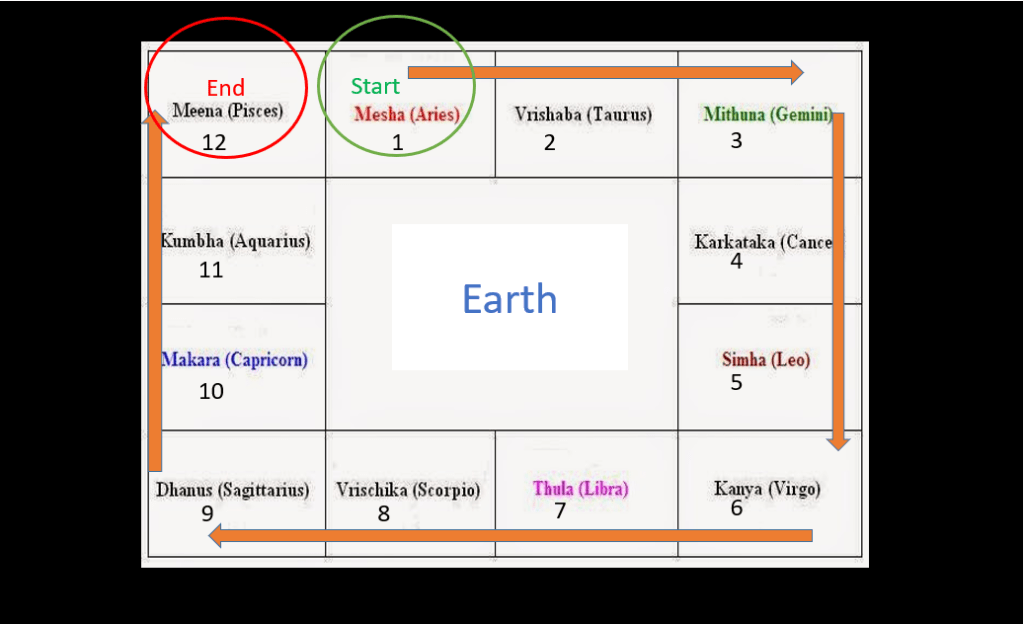
There are multiple ways in which the rashis and the planets’ placement in them can be represented. The two popular styles are the south Indian and the north Indian styles. In the south Indian format, the rashis are arranged clockwise in a rectangular box starting from the second box on the top left.

And this house represents the Mesha rashi or Aries, the first of the 12 Rashis that spans the first 30 degrees of the constellations. The following Rashi rishabham occupies the next box spanning the next 30 to 60 degrees. All the rashis are thus arranged across the 12 boxes and end with Meenam or Pisces, whose co-ordinates are the final 30 of the total 360 degrees.

The box in the middle represents the earth around which the celestial bodies are seen to move. Remember, our system of astronomy is geo-centric that puts earth right in the middle.

The interesting thing to note about the South Indian horoscope format is that the planets, as lords of the rashis, are arranged in the chart in the same order as they are found in the universe.  So, apart from the Moon that is the closest celestial body to earth occupying Cancer and the Sun occupying Leo or Simha rashi,  we find mercury, venus, mars, Jupiter and Saturn arranged clockwise in each of the subsequent rashis.

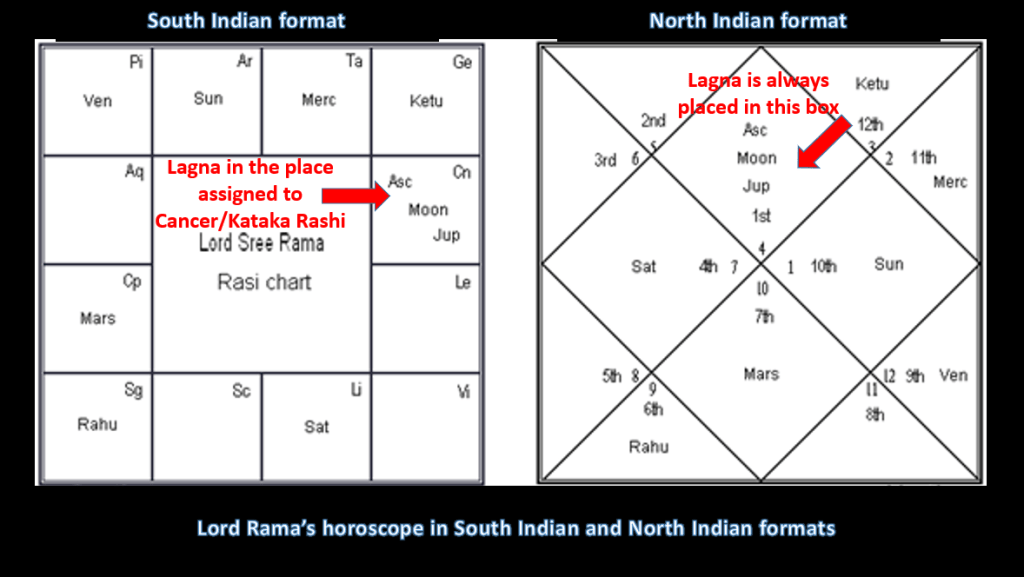
However, in the north Indian format, the rashis are not assigned to the strictly designated boxes. So they are not fixed. They change depending on the ascendant or lagna in the horoscope.

What is lagna?

The lagna represents the nakshatra/rashi that is seen rising on the eastern horizon at the date, time and place of a person’s birth. Depending upon the paada of the nakshatra, it is placed in the corresponding rashi. The lagna, which is designated house number 1 in the horoscope, is believed to set the tone for the nature of a person and the events in his or her life.

In the south-Indian format of a horoscope, the lagna is placed in the box pertaining to the corresponding rashi. On the other hand, in the north Indian format, the lagna is always placed in this centre-most box, which becomes the seat of the Rashi that corresponds to the lagna.

The other important difference is that while the south Indian format is read clockwise, the north Indian format is read anti-clockwise.

So, how do astrologers make predictions?

Each of the nine grahas are vested with certain specific attributes. Some like Jupiter and Venus are considered benefic, while grahas such as Mars and Sun are considered malefic or fiery by nature. Each of the Rashis too possess certain specific qualities. So do the 27 nakshatras.

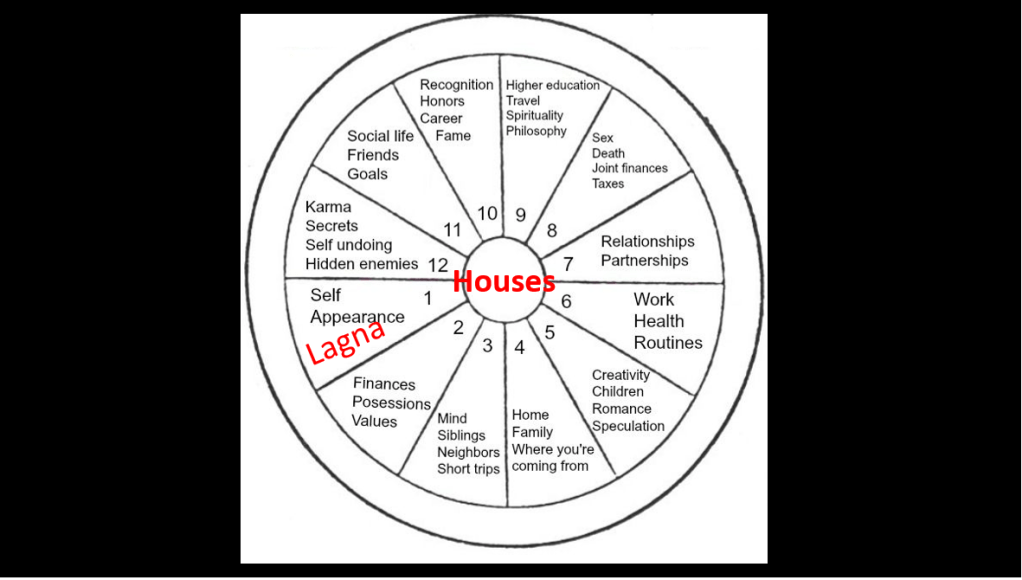
Each of the 12 houses represent something in a person’s life. For instance, the first house or the lagna, as I mentioned earlier represents the person’s self, his nature and his destiny, the second house represents wealth, the third house siblings and so on.

The important thing to remember here is that all the elements in the horoscope including the planets, rashis and nakshatras are constantly moving. While they keep moving, they are also continuously interacting with each other. The interplay of these elements, their movements and interactions are analysed to make predictions about a person’s destiny.

Does that mean that everything is pre-destined and nothing is left to free will?

Not really! A person’s experiences in life are determined by the karma he has accumulated over time and that karma stems from a person’s own actions both in his past and current life. So in a way, astrology holds the person responsible for all that happens to him or her.

While fruits of the person’s actions may choose to play out at different times in one’s present life or in different lifetimes, there is no escaping one’s Karma. What astrology does is merely link the experiences in a person’s present life to his or her past actions and predict how the fruits of those actions are likely to play out in one’s life.

Celebrating the Celestial (The Indian Astrology series)

Most Indian festivals are based on the lunar calendar or based on the movement of the moon around the earth. Each moon day is called a thithi and most of our festivals are linked to the lunar cycle that starts with the new moon day or Amavasya and ends with the full moon or poornima.

Thus, we have ganesh Chaturthi falling on the fourth day of the waxing moon or Chaturthi, Janmashtami falling on the Ashtami tithi or eighth day of the waning moon or rama navami falling on the ninth day of the waxing moon. And of course, we do have many festivities falling on purnimas or amavasyas like Karthik Poornima, mahalaya Amavasya, etc.

But makara sankaranti being a festival of the sun god, is celebrated based on the solar calendar that tracks the sun’s position in the sky as seen from the earth.

Astrologically speaking, makara sankaranthi marks the day when the sun enters the zodiac called makara or capricon.

So, what is a solar calendar?

A solar calendar is cast based on the seasons in a year and the sun’s relative position to the other stars in space. When the earth moves around the sun, its position with respect to the sun keeps changing, causing seasons.

Even though the earth is moving around the sun, for us here on earth, the sun appears to be moving across the sky. So, the solar calendar tracks the apparent position of the sun relative to the stars in the sky.

Also, as the festival is a celebration of a celestial event, it is believed that it could be among the oldest festivals of India. It is said that the festival finds mention in the ancient epic, Mahabharata as Magha mela.

What makes Makara Sankaranthi a celebration?

For us in the Indian subcontinent, the sun’s appearance in the capricon zodiac heralds the beginning of the warmer months of the year. Imagine the ancient people living in sparse shelters with minimum heat insulation. How difficult winter months must have been for them? Lying outdoors, staring at the sky, they would have observed that the sun’s position in the sky kept changing throughout the year.

And they would have noted that the planet starts to get warmer and the days get longer when the sun starts to appear to the north of the equator. And when this happened, they knew relief from the freezing winters was close by. In the absence of thick jackets, weather-proof houses and heaters, I somehow think the celestial event must have been a very good reason to celebrate! And to harvest crops too!

What is Uttarayan?

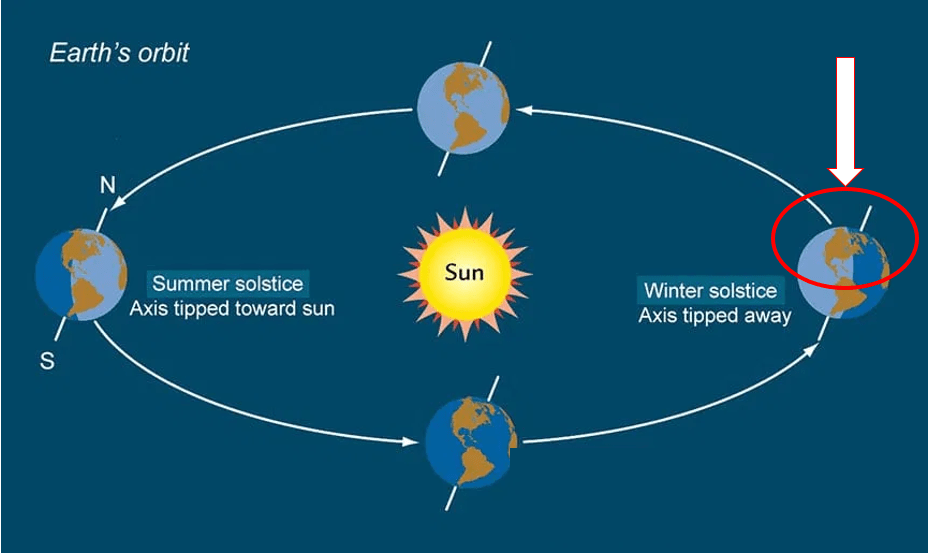
The northward march of the sun with respect to the earth’s equator marks the beginning of the six-month period called Uttarayan in the Indian tradition, Uttara meaning north and ayana meaning movement or march.  This repeated cyclical movement of the sun to the north and to the south is caused by the tilt of the earth’s axis.

Mythologically speaking, the six months of uttarayan equals one day in the life of our gods. The remaining six months called dakshinayan, when the sun is seen to move in the southern direction represents the night of our gods. In the Hindu tradition, Uttarayan is considered an auspicious period.

Makara Sankranti is not the same as Uttarayan

It is often thought that Makara sankaranti marks the start of Uttarayan. But that is not true. Uttarayan or the northward movement of the sun begins immediately after what is called the winter solstice.  The winter solstice marks that day in the earth’s revolution around the sun when its north pole is in its farthest position from the sun. It is also the day with the shortest daylight and longest night of the year.

After this day, the days start to grow longer and the nights  shorter. And this day falls either on December 21st or 22nd of every year, as per the Gregorian calendar. So, in reality, uttarayan starts the day after winter solstice and not on makara Sankranti that falls in mid-January. And this is the system that is followed by most Indian calendars called panchang.

The Indian Calendar System (The Indian Astrology Series)

Unlike the rest of the world, in India, we don’t have just one new year! Different communities from different parts of India celebrate their new years at different times . The new year of Tamils and Malayalees from the south, the Bengalis and Odiyas from the east and that of the Punjabis from up north falls in mid-April. Whereas in Maharashtra, Karnataka and Andhra Pradesh, the start of a new year begins in mid-March. And quite differently, in Gujarat, it is celebrated at the time of Diwali.

So, why do we all have different new year beginnings?

Today, the world follows a standardised system of time keeping based on the Gregorian Calendar system. This calendar is a solar calendar, which is based on the movement of the earth around the sun.

The Gregorian Calendar

According to the Gregorian solar calendar, a year has 365 days and an extra day every fourth year (leap year). A solar year is divided into 12 months with some months having 31 days, some having 30 and February having 28 (0r 29 in a leap year). The year starts on January 1st and ends on December 31st.

Of course, we all know this! We follow this calendar for all practical purposes in India too. This Gregorian calendar system was adopted by India during the colonial era. But, what system of time-keeping did we follow before the Europeans arrived?

The indigenous calendar systems of course! Yes, there was not just one, but many systems of time-keeping in vogue in ancient India.

India has always been home to diverse communities and cultures. Each region, community or clan had evolved its own calendar system, based on its own needs. It is said that according to an assessment by the Government of India in 1952, there were at least 30 full-fledged calendar systems being followed in India.

Some of these were solar calendars, some others were lunar calendars.

So, what is a lunar calendar?

A lunar calendar is a calendar system based on the movement of the moon around the earth. The lunar cycle from new moon to new moon is roughly 29 and a half days. So a lunar month is slightly shorter than a solar month and a lunar year with 354 days is 11 days shorter than a solar year.

Although most Indian calendars follow the lunar cycle, they also try and align the year to the solar cycle that decides the seasons.

In order to reconcile the difference between the two calendar systems, every 3 years, a month is added to the lunar year, and the month is referred to as adhik maas.

Our calendars are luni-solar

So, in reality, most Indian calendars follow a luni-solar system that takes into account both the movement of the moon around the earth and the sun’s position in the sky as seen from the earth. This causes a difference to the start of the year and to the number of days in a year.

This is one of the reasons why the new year in the luni-solar calendars does not fall on the same day every year. For example, Ugadi that marks the start of a new year for the Telugu and Kannada people fell on March 25th in 2020, but was celebrated on April 6th in 2019 and on March 18th in 2018.

Apart from the adjustments made to reconcile the lunar and solar cycles, the new year is also decided by the specific calendar in use in a particular region.

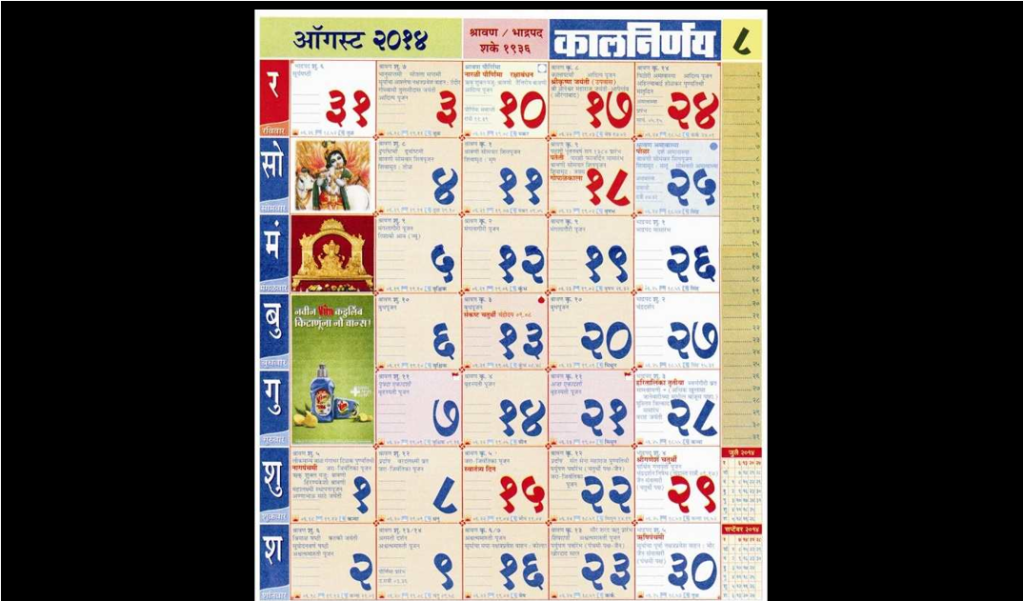
In the Deccan region, particularly in the states of Andhra Pradesh, Karnataka, Telangana and Maharashtra, the the Shaliwahana or Shaka era calendar is followed. According to this calendar, the new year is celebrated on the first day of the waxing or growing moon in the month of Chaitra that stretches from mid-April to mid-May.

The Saka era calendar

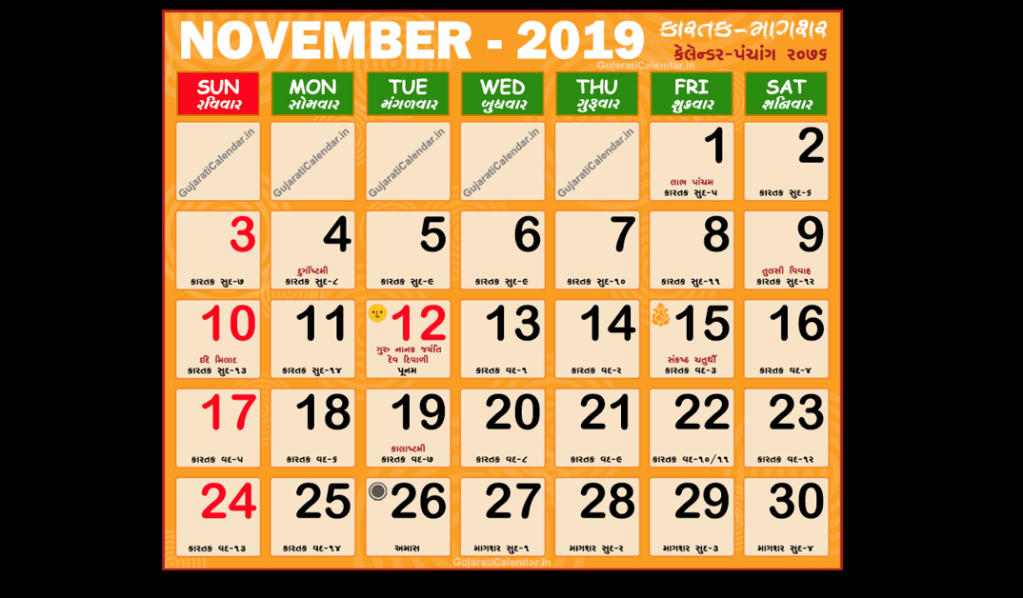
In several parts of Western India and northern India, the Vikram era calendar is followed. According to this calendar, the new year begins with the Amavasya or new moon day in the month of Karthika that stretches from mid-October to mid-November.

The Vikram Samvat calendar

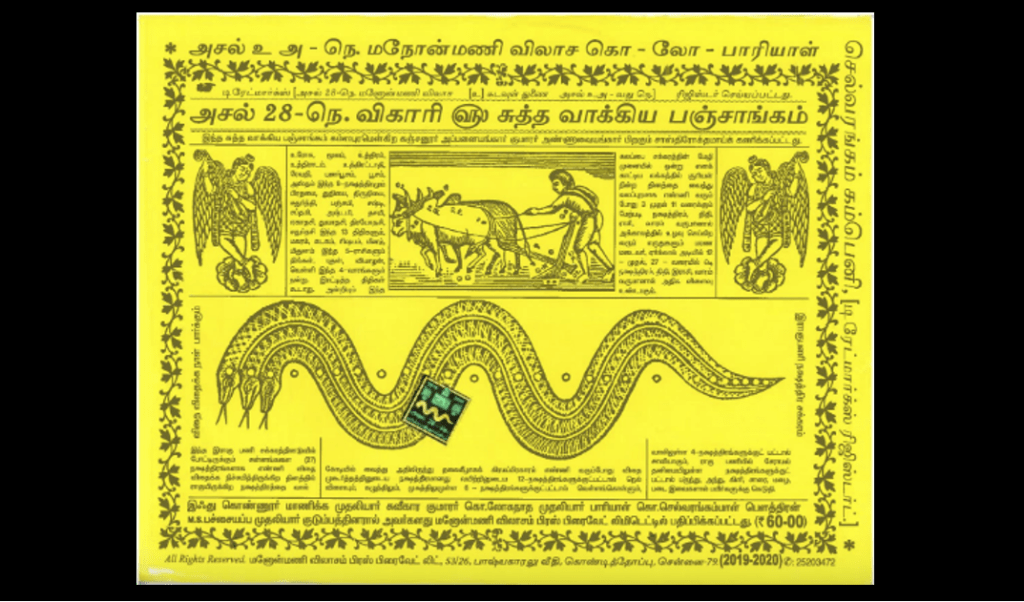
Whereas in Tamil Nadu and Kerala that follow the solar calendar, the new year falls on April 14th every year.  Several parts of Eastern India including Odisha and Bengal too follow a similar calendar and their new year too falls around  the same date.

The Tamil luni-solar calendar

On March 22nd, 1957, the Indian government adopted the Shalivahana or Shaka era calendar as the official calendar along with the Gregorian calendar.

The Government of Indian adopted the Saka era Calendar (along with the Gregorian Calendar) as the official calendar in 1957

What does the Panchanga tell us? (The Indian Astrology Series)

The word Panchanga or Panchangam, an many of you would know, refers to the Hindu calendar and is a combination of two words ‘pancha’ and ‘anga’ meaning five parts. The five parts are vara, tithi, karana, nakshatra and yoga.

Indian Astronomy & Modern Astronomy – A key difference

The key difference between modern day astronomy and ancient Indian astrology. While modern astronomy has established that the earth revolves around the sun, the Indian astrology follows a geo-centric model, where the celestial bodies in the sky are taken as moving bodies but the earth is presumed to be fixed. So, the movements of the sun, moon and other planets are studied keeping the earth as a fixed point. So, when we say the sun moves across the sky, what we mean is that the Sun is seen to be moving across the sky as viewed from the earth.

Vara

Vara refers to the week day. Following the Greeks, ancient Indian astronomers chose to adopt a 7-day week (why does the week have 7 days?), and the days of the week have been named after the Sun, the Moon and five planets including Mars, Venus, Jupiter, Mercury and Saturn. Thus, we have the ravivara, somavara, mangalvara, budhavara, guruvara, the shukravara and the shanivara.

Unlike the Gregorian calendar, where the day is counted from midnight to midnight, the day according to the Panchang is from sunrise to sunrise. However, the time of the sunrise changes slightly everyday as the relative position of the earth in its orbit vis-à-vis the sun keeps changing. As a result, the duration of the day is not always 24 hours.

And as we measure the day in hours and minutes, in Indian astrology, the duration of the day is measured in ghatikas or nadis, and vighatikas. A day comprises 60 ghatikas; each ghatika of 24 minutes duration.

You might note that it is the exact inverse of 24 hours of 60 minutes duration each that we follow today.

Tithi

The second element of the Panchanga is the tithi. While vara depends on the movement of the sun, the tithi is decided by the movement of the moon. A tithi refers to one lunar day. A lunar month from new moon to full moon is divided into two parts called paksha. The brighter half or the period of the waning moon is called the Shukla paksha and the darker half or the period of the waxing moon is called Krishna Paksha.

Each of the two pakshas has 15 thithis. The shuklapaksha starts with the first day of the waning moon called pratama or pratipada and ends with the 15th day, which is the full moon or Purnima. The Krishnapaksha starts with the first day of the waxing moon and ends on the 15th day, which is the no moon day or Amavasya.

In all, there are 30 tithis in a lunar month.

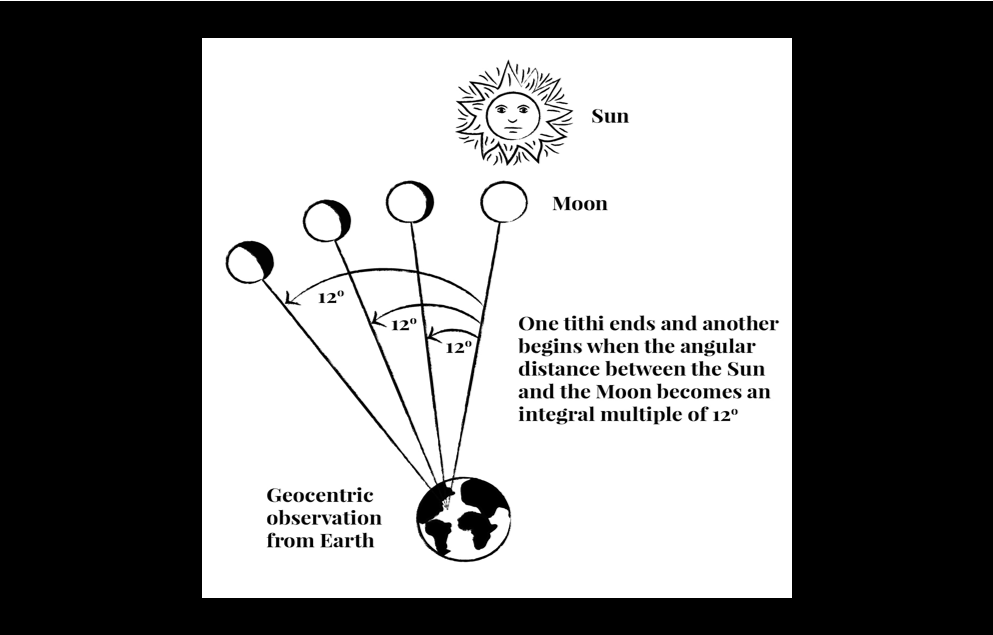
Now, the duration of a tithi is decided by the movement of the moon with respect to the sun. It is the time that the moon takes to move 12 degrees away from the sun, as seen from the earth.

But why is the distance being measured in degrees?

Here’s why. You may remember from the basic astronomy we learnt at school that the celestial bodies in our solar system move in a fixed but elliptical orbit. And we on earth see these bodies move in an arc across the sky above us.  So the only way distances can be measured on an elliptical orbit is by measuring it in angles or degrees.

As with a solar day or dina, the duration of the tithi also changes. This is because the sun and the moon are travelling at varying speeds and the time taken by them to be separated by 12 degrees keeps changing.   So, a tithi can last anywhere between 19 and 26 hours. And you can end up having more than one tithi, or an incomplete tithi in a 24-hour day.

Karana

The third aspect of the Panchanga is the Karana. A Karana is half a tithi. In other words, it is the time taken for the moon to move 6 degrees away from the sun. In all there are 11 Karanas of which 6 are considered benefic and the remaining 5 are malefic.

Both Tithis and Karanas are vested with good and bad attributes. So some tithis and Karanas are considered auspicious while some others are considered inauspicious.

Yoga

Yoga is another division of time in the panchanga. The word yoga as you’d all know means union or alignment. The yoga mentioned in the Panchanga refers to the interactions between the sun and the moon, the two key celestial bodies whose movements are tracked in our calendars.

Mathematically speaking, the yoga of the day is obtained by adding together the positions of the sun and the moon as seen from the earth, in angles or degrees. The sum obtained is then divided into 27 parts, each of which is a yoga. Each of these 27 yogas is given an attribute, some good and some bad. The yoga prevailing at sunrise is taken to be the yoga of the day.

Yoga is important from the point of view of casting a birth chart or a kundali and also for fixing the appropriate time to carry out specific activities. The yoga in which a person is born is believed to decide his or her nature and also if she is likely to be lucky, wealthy and so on. As mentioned earlier, Yoga also helps fix the muhurta or the right time to carry out a specific action.

Nakshatra

Nakshatras are a very ancient Vedic concept where the moon’s path in the sky is divided into segments of constellations. We all know the moon rotates around the earth. Its movement in the sky is traced, and depending on its position, its orbit is divided into 27 arcs into which fall various constellations. In other words, the nakshatra system is used to plot the moon with respect to the other stars in the sky (why are there 27 nakshatras in astrology?).

Although, nakshatra is commonly understood as a star, in astrology, it actually refers to a constellation of stars.  The particular constellation where the moon is found is identified by a prominent star in that constellation. And so we have the Ashvini, Chaitra, Revathi, Jyeshta, Vishaka nakshatras etc.

In Indian mythology, the moon is believed to chase the nakshatras who are imagined as his wives. To the ancient Indian astronomers, however, these nakshatras were a kind of unchanging celestial markers. These markers enabled the astronomers to keep track of the moon’s movement across the sky.

As with yoga, the nakshatras are also believed to possess certain specific attributes. So a person born in a particular nakshatra is believed to possess certain specific qualities.

Lunar tilt of our calendars

Of the above five limbs of the panchanga, nakshatra, tithi and karana are based on the movement of the moon while only the vara is based on the movement of the sun. Yoga, of course, takes into consideration the orbits of both the sun and the moon. So we find that 4 out of the 5 elements of the panchanga are based on the moon’s movement, making our calendars a largely lunar calendar.

Is Astrology a pseudo-science? (The Indian Astrology Series)

Today, when we think astrology or any other type of fortune telling, many of us tend to rubbish it off as a pseudo-science that makes a false claim to do the impossible by claiming to predict the future.

But is fortune telling really a pseudo-science that tries to exploit human vulnerability and play on our fear psychosis? Is it all about doomsday prophecies, or making rosy promises?

While the answers to the questions may not be simple or straight, it’d definitely help to know that fortune-telling evolved for a different purpose other than what we know it for, today.

When I say fortune-telling, I’m referring to astrology here. Of course, there are many other methods used to foretell the future, which we shall look at, maybe in one of the following videos. Right now, we’ll stick to astrology.

Let’s now go back a few thousand years to ancient India. The ancient man, who was still trying to figure out the laws of the complex world he lived in, probably found comfort in certain repetitive happenings and interesting patterns that he observed up in the sky.

Looking up at the sky, he noted that the celestial bodies followed a certain fixed path. For example, the sun always rose in a particular direction and set in the opposite direction. The phases of the moon followed a similar repetitive pattern in its journey across the sky from no moon to new moon.

And he observed that nature also followed a set pattern where the sun blazed away in a particular season, the rains fell in another, and the flowers bloomed at a particular time and so on. He soon realised that these patterns were cyclical and were related to the back and forth movement of the sun across the sky, as seen from the earth. He called it the natural cosmic order, Rta.

Similarly, he observed that the phases of the moon followed a 30-day cycle from new moon to new moon. So, he referred to the moon as Masakrit or the maker of months. The movement of the moon and the sun thus enabled Vedic man to arrive at the concept of months and year and create a calendar for time-keeping.

As I have already mentioned in my previous videos, the calendar system followed initially was primarily lunar, based on the movement of the moon across the star constellations called nakshatras. This may have been because the moon’s journey across the sky is far more noticeable in the night than the sun’s path during the day.  So, it’s only around the few centuries before the start of the Christian era that the rashi system based on the movement of the Sun was adopted and our calendars became luni-solar.

The initial development of astrology was based entirely on observation of the luminary bodies which explains why the subject is called Jyotisha, which is derived from the word Jyoti that means light in Sanskrit. The most ancient knowledge on this subject is found in the Vedas, where it’s included as an auxillary subject and is referred to as Vedanga.

But from where did man’s need for astrology arise? Why did he find the need to make predictions?

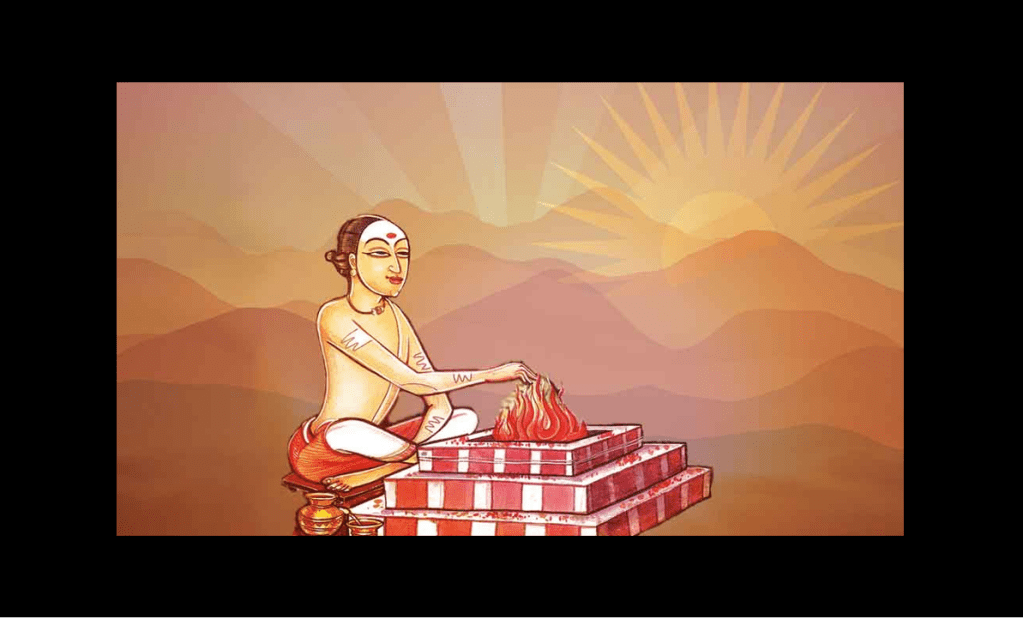
The need for astrology among Vedic Indians rose from their need to perform sacrificial rituals or Yagnas at appropriate and auspicious times. Yagnas or sacrifices, as you’d know, was Vedic man’s way of communicating with the gods in heavens, to seek their blessings. And these sacrifices were effective only if they were carried out strictly as per specifications laid down in the Vedic texts. 

So the ancient field of Jyotisha only dealt with time-keeping in order to ascertain the auspicious day and time as required for the Vedic rituals. In fact, a Vedic ritual called Gavaamayana was specifically dedicated to observing the daily movement of the Sun during the day and the disappearance of the moon in the night.

So, making prophesies about the future, as done today were not part of the early Jyotisha.

However, over time, man realised that what happened in the sky had a bearing on the life on earth too. For example, a particular hot summer caused by a harsh Sun or the failure of rains created distress for livings beings on the earth. An understanding of this inter-linkage and the cyclicality that he observed in the cosmic events led man to predict happenings on the earth based on certain happenings in the sky.

And this understanding led to the development of predictive astrology although the prophesies were made for the community at large and not for individuals. Our epics, Ramayana and Mahabharata, are replete with references to astronomical references and in the context of the Mahabharata war, we find a detailed account of the planetary and stellar configurations that fortell an impending war of epic proportions.

Indian astrology is firmly rooted in the basic philosophy or world view of ancient Indians.

For Indians, cosmic order is cyclical. The time from creation to preservation to eventual destruction follows a cyclical order. This cyclicality forms the basis for the idea of rebirth. A man is born, he lives and then he dies, only to be born again. In such a worldview, events tend to repeat. These repetitive events thus become predictable.

But again, as people lived in small and closed groups and shared  a combined fortune, prophesies were made for societies and communities as a whole. It’s only in more recent years, that the concept of casting an individual’s horoscopes and predicting his or her fortune came into practice. This again is based on yet another philosophical idea integral to Indian culture.

In Indic religions that include Hinduism, Buddhism, Jainism and Sikhism, man’s life in this world is believed to follow a pattern that is determined by his actions, what is called Karma. So his own actions decide what happens to him either in this birth or the next, thus enabling predictions based on his current conduct or behaviour. The development of this idea led to the evolution of fortune-telling for individuals.

And there is one compelling logic that binds all these ideas, and that idea is called Brahman. Ancient Indians perceived themselves as an integral part of the larger Universe. The ancient man saw himself as the microcosm that was part of the larger macrocosm.

This idea of underlying oneness in the Universe was defined as Brahman. Based on this understanding, what happened in the distant heavens, such as the changes in the movements of distant planets was believed to have a bearing on life on earth.

To use a loose analogy, this idea is a bit like the idea of modern-day chaos theory, where a butterfly flapping its wings in Peking, China is believed to impact the weather systems in distant New York. This inter-connectedness of the Universe is deep and has not yet been fully understood by mankind.

Having said that, we must remember, ancient Vedic seers were among the first men to perceive this oneness and harness this knowledge to bring a little more order to our lives!

Why are there 27 Nakshatras in Indian Astrology? (The Indian Astrology series)

The truth is that there were not 27 but 28 nakshatras in the ancient Indian Jyotisha system. The Nakshatra system that originated in India really long ago, divides the visible constellations in the sky into 27 segments or nakshatras with each constellation named after a prominent star in that constellation. The moon’s journey through each of these nakshatras takes about 27.3 days, when the moon also completes a revolution around the earth.

But the number of nakshatras was not always 27. There were initially 28 which included a star called Abhijit placed between the Uttara ashaada and the Sravana nakshatras. According to the Mahabharata, Yudhishtra, the eldest of the Pandavas, was born under this star. This star subsequently lost its individual identity and the number of nakshatras were reduced to 27.

But why did this happen? Why did the number of Nakshatras become 27?

Scholars believe that this may have happened when Indian astronomy that followed a lunar calendar system encountered the solar calendar system in the early centuries of the Christian era. The tropical or solar calendar system, as we have seen, based its time-keeping system on the sun’s movement across the sky . At some point in time, these two systems – lunar and solar – got integrated and we ended up with a luni-solar system.

However, this integration created certain mathematical problems. We know that the lunar system divided the constellations in the sky into 28 arcs whereas the solar system divided them into 12 segments called Rashis. An integration of the two systems meant that the 28 nakshatras had to be accommodated across the 12 Rashis.  But 12 could not divide 28 evenly. However, 27 could be divided neatly by 12 without leaving a messy fraction.

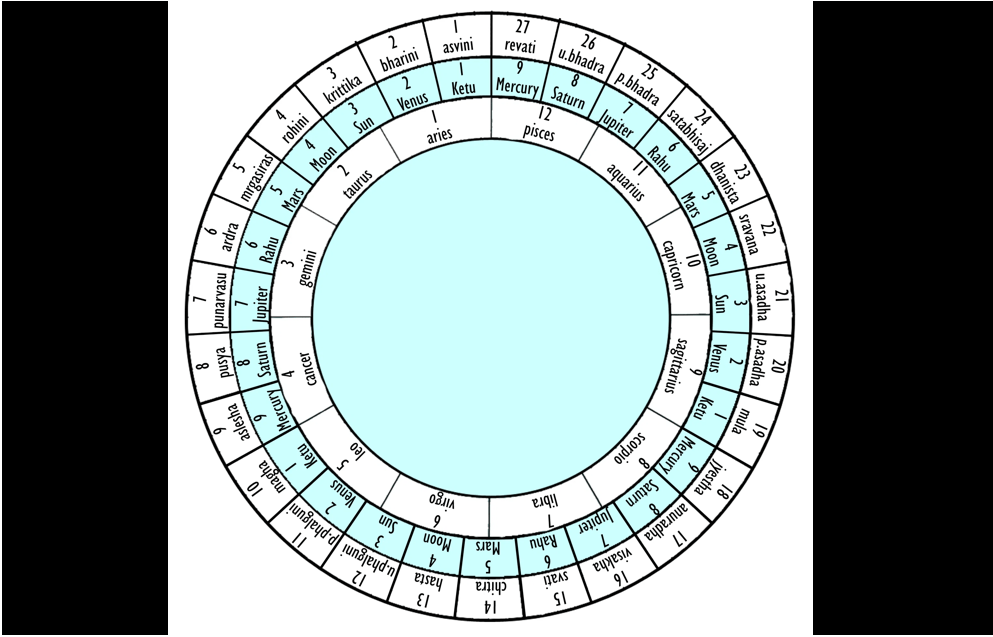
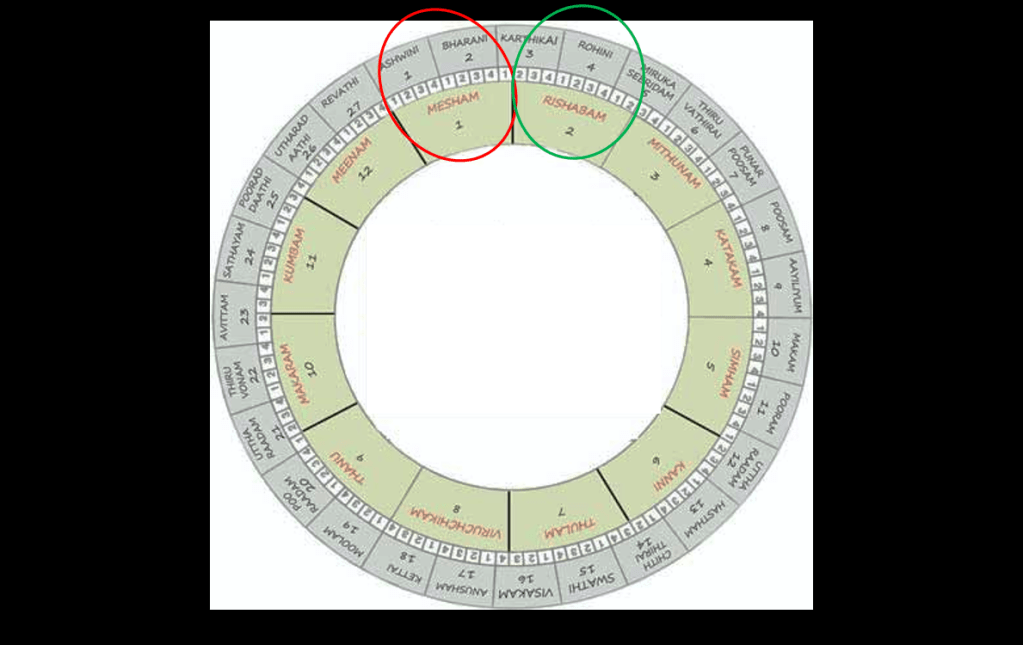
So the number of nakshatras was brought down to 27 and each of the 27 nakshatras was divided into 4 quadrants called paadas. So, we had 108 paadas for the 27 nakshatras. Now, when the paadas of these nakshatras were divided across 12 rashis, we ended up with 9 paadas spanning 3 nakshatras fitting neatly into each of the 12 rashis.

All the 108 paadas of the 27 Nakshatras fit neatly into 12 Rashis

For example, the Mesha rashi has all the four paadas of Ashwini and Bharani and the first paada of Krithika. The following Rishabha rashi has the remaining three quarters of the Krithika nakshatra, all the four paadas of Rohini and two paadas of the next nakshatra, Mrigashirisha. This fitment goes on till all the 108 paadas of the 27 nakshatras are neatly fitted into the 12 rashis.

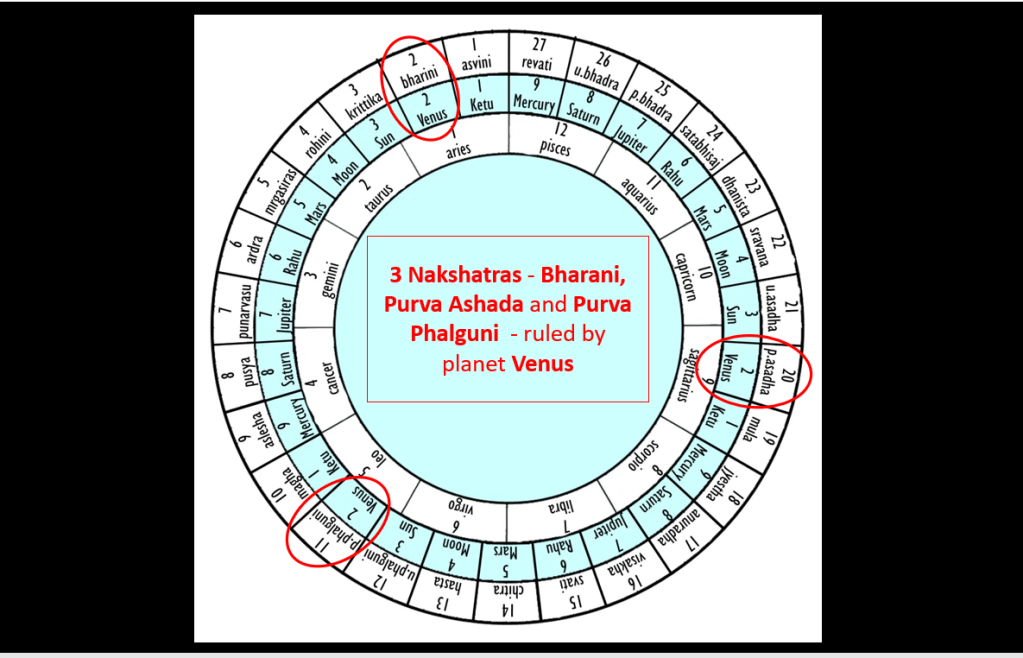
Moreover, 27 nakshatras also meant that each of the nine grahas or planets could be assigned 3 nakshatras each, which would not be possible with 28.

Each of the nine grahas (planets) ruled 3 Nakshatras

Similarly, 360 degrees, which is the measure of the the sun and the moon’s orbit around the earth, can be divided by 27 evenly into 13 degrees and 20 minutes per nakshatra (60 minutes make a degree). Whereas, dividing 360 by 28 leaves a messy fraction.

So, essentially, it was to align these lunar and solar calendar systems that the number of nakshatras was reduced from 28 to 27. So, we find that understanding astronomy and astrology calls for a deep understanding of numbers and their nature too!